
Multiple Offers on Your Home? Which One Should You Choose?
Updated November 17, 2026

Multiple Offers on Your Home? Which One Should You Choose?
Receiving multiple offers can give sellers more options, but the highest price does not always lead to the strongest result. Comparing financing, contingencies, and closing terms carefully can help sellers make a more informed decision.
📝 Introduction
When a home attracts more than one offer, sellers face an important decision: which proposal provides the most favorable combination of price, terms, and closing expectations? Although multiple-offer situations can occur in competitive markets, they are not guaranteed for every listing. Each offer may differ in financing, appraisal conditions, contingency periods, deposits, and closing dates. Understanding these differences helps sellers evaluate their options before committing to a purchase agreement.
🔑 5 Pro Moves for Sellers Facing Multiple Offers
1. Establish Your Price and Timing Priorities
Knowing your bottom line gives you confidence and speed during offer review.
Now: Discuss your target proceeds, acceptable terms, and ideal closing date privately with your real estate agent before reviewing offers.
2. Compare Every Offer Beyond the Purchase Price
The highest dollar doesn’t always equal the best net outcome.
Now: Rank offers by net proceeds after costs, financing terms, deposit amounts, timeline, and contingencies.
3. Review Escalation Clauses Carefully
Some buyers include escalation clauses that may increase their offer when specified competing-offer conditions are met. These clauses can include buyer-defined maximum prices and documentation requirements.
Now: Review the clause's triggering conditions, proposed price increases, maximum amount, and supporting-document requirements with your agent before responding.
4. Evaluate Contingencies and Buyer Readiness Together
Inspection, appraisal, and financing contingencies affect how a transaction proceeds. An offer with fewer contingencies is not automatically the strongest option.
Now: Review financing documentation, contingency deadlines, appraisal considerations, and deposit terms while keeping your disclosure responsibilities in mind.
5. Communicate Quickly & Confidently
In a multi-offer scenario, speed matters. Delays can derail a bid.
Now: Prepare listing-agent updates, have key documents ready (including disclosures, applicable HOA documents, and property reports), and commit to evaluating offers within a set window. Use consistent, transaction-related criteria when comparing proposals.
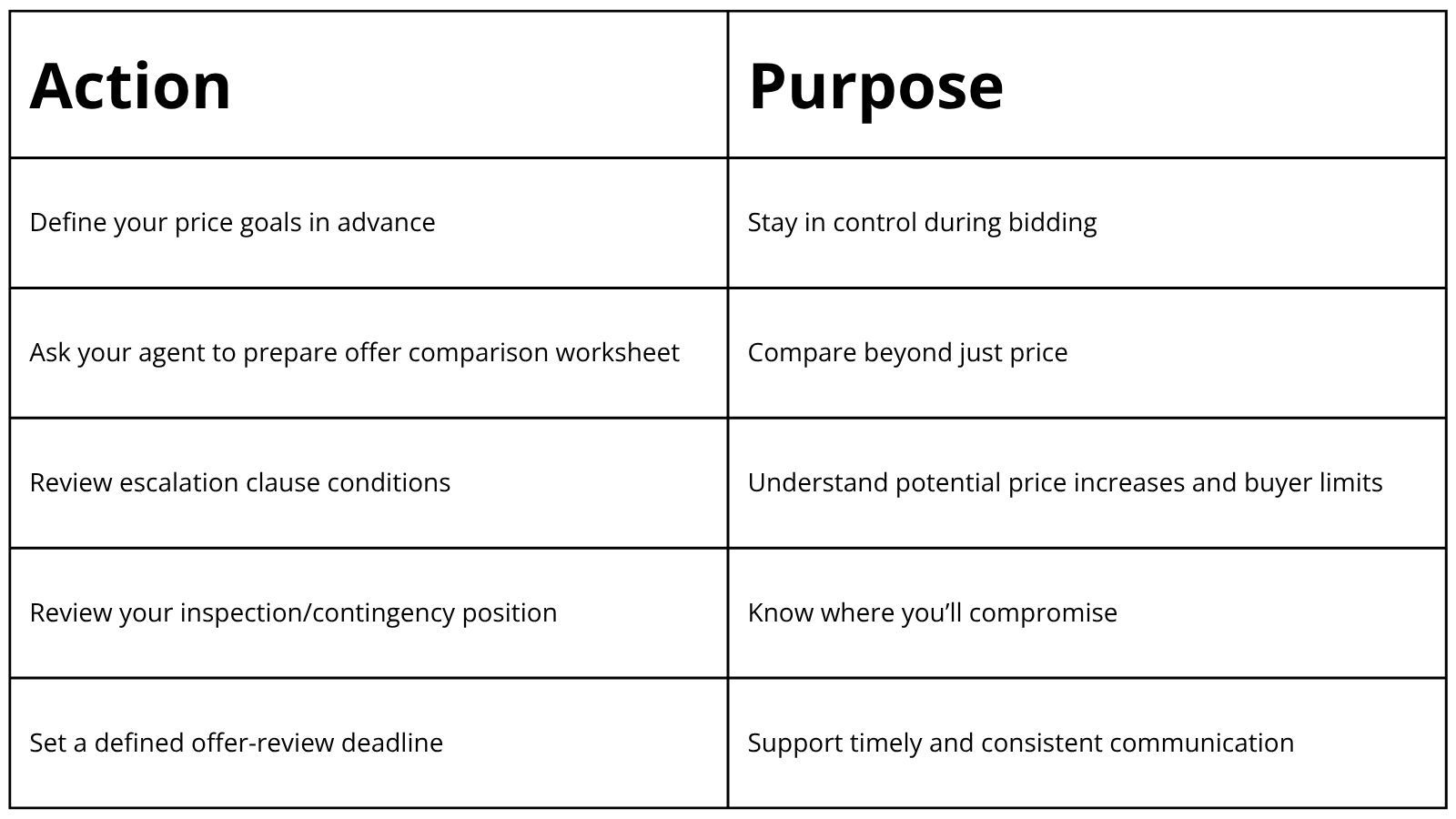
✅ What You Can Do Now
❓ FAQ
Q: Should I always go with the highest offer in a bidding situation?
A: Not necessarily. A higher purchase price may be accompanied by financing conditions, concessions, or contingencies that affect the transaction. Comparing the full terms helps sellers determine which offer best meets their goals.
Q: Does bidding war happen only in seller’s markets?
A: No. Individual properties can attract multiple offers even when the broader market is balanced. Pricing, property condition, available inventory, and buyer interest can influence the response to a particular listing.
Q: Should sellers automatically accept an offer with an escalation clause?
A: No. Escalation clauses should be reviewed carefully because their conditions, documentation requirements, and maximum prices can vary. Sellers should discuss the language and potential implications with their agent and seek legal guidance when appropriate.
🔚 Conclusion
Receiving multiple offers creates an opportunity to compare different paths to a successful sale. However, choosing the right proposal requires more than identifying the highest price. Financing strength, contingencies, estimated proceeds, closing schedules, and contract language all deserve careful consideration. With clear priorities and an organized review process, sellers can make informed decisions that support their financial goals and preferred transaction terms.
This blog is for general informational purposes only and does not constitute legal, tax, accounting, investment, or professional advice. Always consult with qualified professionals before making any decisions based on this content. School information including addresses, phone numbers, and emails was accurate as of the blog’s published date but may change without notice. Please verify directly with the school or institution. This content is provided “as is,” without warranties of any kind. If you are currently under an exclusive agreement with another real estate broker, this blog is not intended as a solicitation.
Contact Us