
Are Buyers Noticing Your Space or Your Style?
Published October 22, 2026

Are Buyers Noticing Your Space or Your Style?
Not necessarily. Personal touches are part of living in a home, and sellers don't need to remove every sign of their style before listing. However, highly individualized colors, décor, room uses, collections, or customized features can sometimes make it harder for prospective buyers to focus on the property itself. Before making changes, consider which personal elements complement the home and which ones may distract from its space, layout, and features.
📝 Introduction
When buyers walk into a property, are they noticing the space, layout, and features, or are personal decorating choices drawing their attention first? Prospective buyers may be trying to understand the rooms, storage, outdoor areas, and how the property could work for them. Strongly personalized spaces can sometimes compete for attention with those features. Preparing for the market doesn't mean removing everything that gives the home character. The goal is to decide where simplifying certain areas may help buyers focus more clearly on the property.
🔑 5 Things Sellers Should Consider Before Listing
1. Look at the Home From a Buyer’s Perspective
After living in a property for years, it's easy to stop noticing things that immediately stand out to someone seeing it for the first time.
Bold wall colors, large collections, extensive décor, customized rooms, or highly specific design choices may attract attention before buyers have had an opportunity to appreciate the home's layout and features.
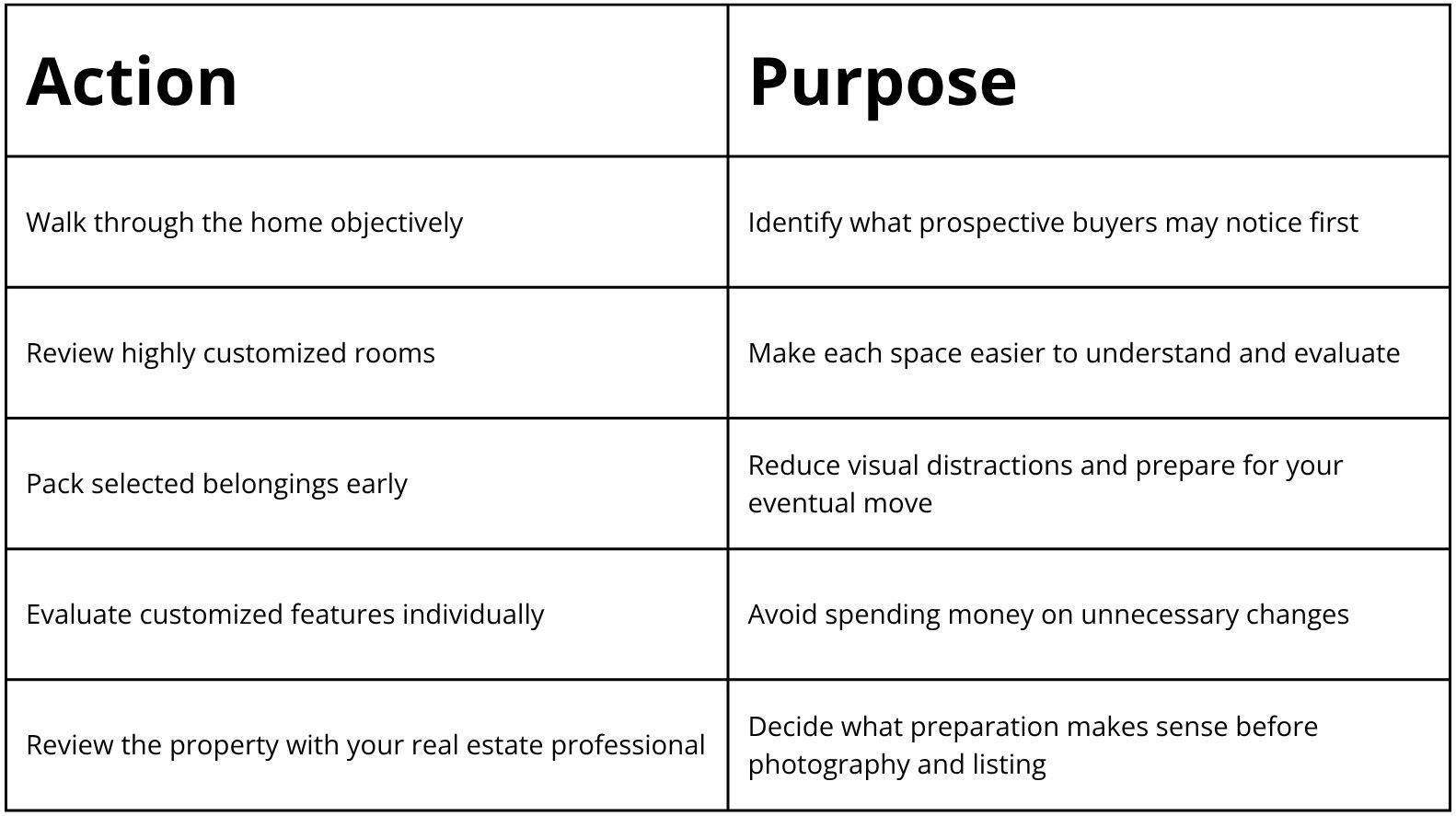
Now: Walk through each room with your real estate professional and identify what draws attention first. Ask whether the room itself is the focus or whether personal items and design choices are competing with it.
2. A Room’s Purpose Should Be Easy to Understand
Homeowners often adapt rooms to fit their needs. A bedroom might become a hobby room, a dining area may become an office, or a garage may serve another purpose.
There's nothing inherently wrong with those uses, but buyers may find it helpful when they can easily understand the space and its potential functions.
Now: Consider whether highly customized rooms would benefit from being simplified or rearranged before photography and showings. The goal isn't to dictate how a buyer should use the room, but to make the space itself easy to evaluate.
3. Personal Collections Can Change How a Room Feels
Large collections, extensive wall décor, countertop items, and other belongings can accumulate naturally over time. When there are many items in a room, buyers may pay more attention to the belongings than to the property's features.
Large collections can also visually reduce the amount of open space buyers perceive.
Now: You don't need to empty the house. Consider packing some items early, particularly in rooms where belongings cover countertops, shelving, walls, or significant portions of the available space. Focus on the amount and placement of items rather than what they may reveal about the homeowner.
4. Customized Features Deserve Individual Consideration
Some homeowners have built-in shelving, specialty lighting, entertainment areas, hobby spaces, themed rooms, or customized outdoor features. Whether something should be changed before selling depends on the feature, its condition, cost, and how it fits with the rest of the property.
Removing or changing a customized feature isn't automatically the right decision.
Now: Before spending money to undo a customization, discuss it with your real estate professional. Some features may be worth leaving exactly as they are, while others may benefit from relatively simple adjustments.
5. Simplifying Doesn't Mean Making the Home Look Empty
There is a difference between reducing distractions and removing so much that a property loses warmth and context.
Furniture and selected décor can help buyers understand room size, furniture placement, and how spaces relate to one another.
Now: Focus on balance. Keep items that support the presentation of the property and consider removing items that dominate a room, restrict movement, cover important features, or make the space difficult to evaluate.
✅ What You Should Do Right Now
❓ FAQ
Q: Do I need to remove all of my personal photos before selling?
A: Not necessarily. The appropriate amount depends on the property and its presentation. If photographs or other items dominate walls, shelves, or surfaces, reducing some of them may help prospective buyers focus more on the home itself. The consideration should be visual presentation, not the identity of the people depicted.
Q: Should I repaint rooms with bold colors?
A: Not automatically. Paint condition, color, lighting, surrounding finishes, preparation budget, and the property's overall presentation can all matter. Review the room as part of the complete property before deciding whether repainting makes sense.
Q: What if I converted a bedroom into an office or hobby room?
A: A customized use doesn't automatically mean the room needs to be changed back before listing. Consider whether prospective buyers can still understand the room's size, layout, and potential uses. Your real estate professional can help evaluate how the space should be presented and accurately described, including any relevant differences between its current use and its permitted use.
Q: Should I remove customized features before selling?
A: Not automatically. Some customized features may contribute positively to the property, while others may appeal to a narrower range of purchasers. Consider the cost of making a change, the condition of the feature, and how it affects the overall presentation before deciding.
🔚 Conclusion
Preparing a personalized home for sale isn't about removing everything that reflects how you've lived there. It's about helping prospective buyers see the property clearly. By reviewing customized spaces, reducing unnecessary distractions, and evaluating each potential change individually, sellers can prepare the home without automatically spending money to undo every personal choice. Before making significant changes, consider how each decision supports the property's overall presentation and selling strategy.
This blog is for general informational purposes only and does not constitute legal, tax, accounting, investment, or professional advice. Always consult with qualified professionals before making any decisions based on this content. School information including addresses, phone numbers, and emails was accurate as of the blog’s published date but may change without notice. Please verify directly with the school or institution. This content is provided “as is,” without warranties of any kind. If you are currently under an exclusive agreement with another real estate broker, this blog is not intended as a solicitation.
Contact Us