Did You Tell Your Agent Everything About the House?
Published September 24, 2026

Did You Tell Your Agent Everything About the House?
When selling a California home, what you know about the property can matter. Seller disclosures address the property's condition, known defects, hazards, and other applicable information. A problem that happened in the past should not automatically be dismissed simply because it was repaired. Before completing your disclosures, discuss known property issues and relevant history with your real estate professional so the information can be addressed appropriately.
📝 Introduction
Most homeowners know their property better than anyone else. You may remember a roof leak from several years ago, water that entered the garage during a heavy storm, an electrical issue that was repaired, drainage work in the backyard, or another condition that may not be obvious during a showing. When you decide to sell your home, that knowledge can become important. Seller disclosures provide buyers with information about the property, so taking the time to review what you know and communicate it accurately is an important part of preparing for the sale.
🔑 5 Things Sellers Should Know Before Listing
1. Your Agent Needs to Know About Property Issues
California seller disclosure forms address numerous aspects of a property's condition, including whether the seller is aware of certain defects or problems involving specified components and systems.
Your real estate professional can help you through the disclosure process, but you are an important source of information about the property's history and conditions you have observed.
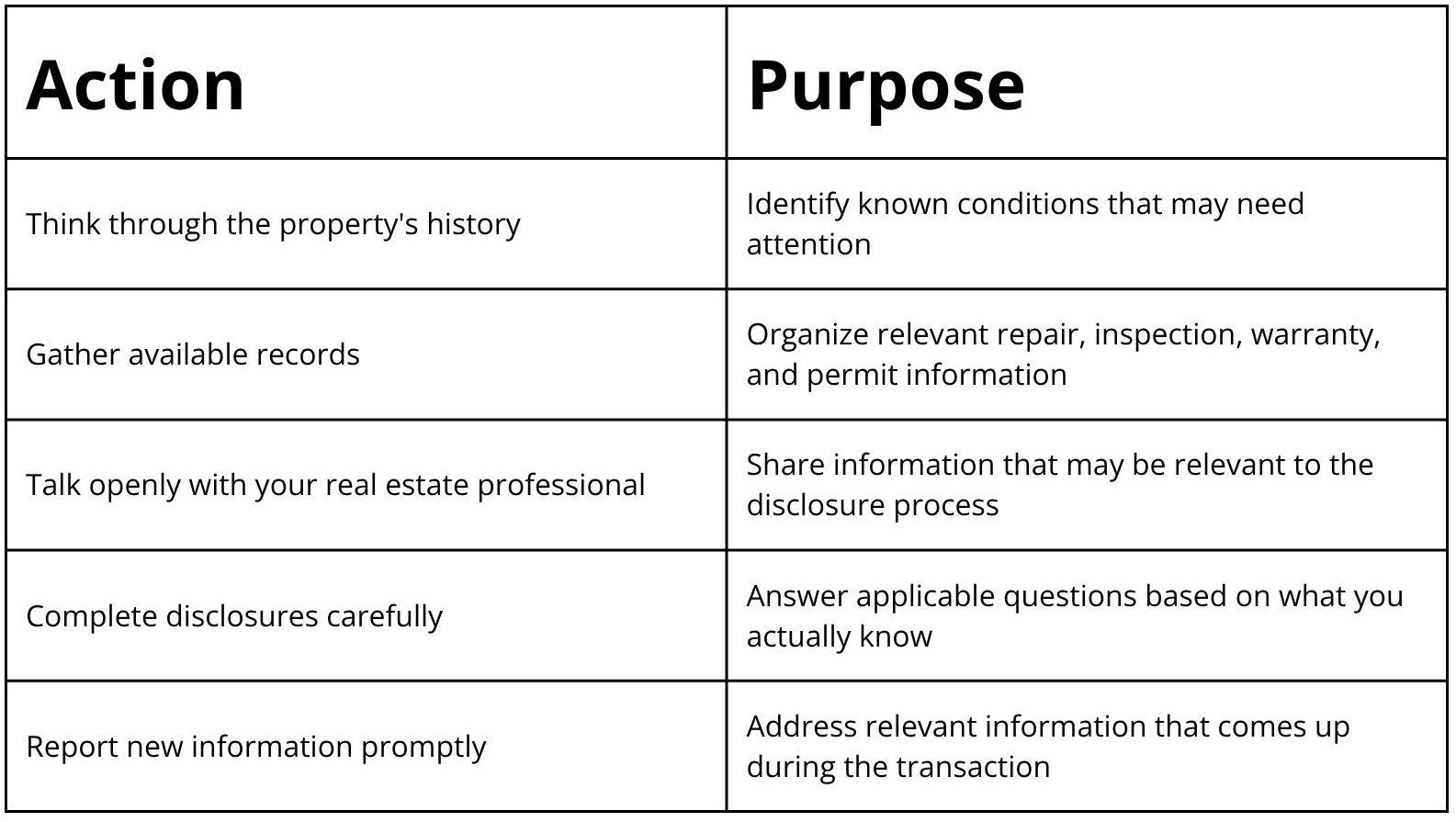
Now: Before completing your disclosures, think through your ownership of the property and discuss known conditions or concerns with your real estate professional.
2. Past Problems Can Still Be Relevant
A condition doesn't necessarily become irrelevant simply because it happened several years ago or was repaired. Depending on the circumstances, the history of a roof leak, water intrusion, drainage problem, structural issue, or another property condition may still be important information during the disclosure process.
The question isn't always limited to whether the problem exists today. What you know about the property's history can also be important.
Now: Gather available information about significant past property problems and repairs. If you're uncertain whether something is relevant, discuss it with your real estate professional and seek the appropriate professional guidance when needed.
3. A Repair Doesn't Automatically End the Disclosure Question
Repairing a problem and determining what information should be included in your disclosures are separate considerations. Completing a repair doesn't necessarily mean the history surrounding the condition should automatically be left out.
Receipts, invoices, warranties, permits, inspection reports, or other available records can also provide useful information about what occurred and what work was completed.
Now: Don't automatically leave something out simply because you believe it has been fixed. Discuss the circumstances and any available documentation with your real estate professional.
4. Don't Guess When Completing Your Disclosures
California seller disclosure forms ask homeowners about conditions they are aware of. Sellers should answer applicable questions carefully and based on what they actually know.
You don't need to speculate about something you don't know. If you're uncertain about a question or don't understand what is being asked, get clarification before answering.
Now: Complete your disclosures accurately based on your knowledge of the property. Ask questions when something isn't clear rather than making assumptions.
5. New Information Can Matter After the Forms Are Completed
Property information can sometimes come to light after the initial disclosure documents have been completed. You might remember an earlier repair, receive additional information about previous work, or learn something new during an inspection.
That information shouldn't simply be ignored because the original disclosure forms have already been completed.
Now: Keep communicating with your real estate professional throughout the transaction. If you remember something important or receive new information concerning the property, bring it up promptly so it can be addressed appropriately.
✅ What You Should Do Right Now
❓ FAQ
Q: Do California sellers have to disclose every repair ever made?
A: Not necessarily. The circumstances surrounding a repair or property condition can matter. Sellers shouldn't assume that every routine maintenance item needs the same attention, but they also shouldn't automatically dismiss the history of a significant property condition simply because it was repaired.
Q: What if I don't know the answer to a disclosure question?
A: Don't guess. Review the question carefully and discuss it with your real estate professional. If specialized information is needed, the appropriate professional may need to be consulted.
Q: What if a previous problem was professionally repaired?
A: Keep any available documentation concerning the work. A completed repair can provide useful information about the property's history, but it doesn't automatically determine whether the previous condition is no longer relevant to the disclosure process.
Q: What if I remember something after I already completed the disclosures?
A: Tell your real estate professional promptly. New or remembered information can be reviewed and, when appropriate, the disclosure information can be updated.
🔚 Conclusion
Selling a California home involves more than preparing the property for photographs and showings. The information you have about the home's condition and history can also play an important role in the transaction. Before completing seller disclosures, think through significant property issues you have experienced, gather available records, and discuss relevant information with your real estate professional. If additional information comes to your attention during the transaction, bring it up promptly so it can be addressed appropriately.
This blog is for general informational purposes only and does not constitute legal, tax, accounting, investment, or professional advice. Always consult with qualified professionals before making any decisions based on this content. School information including addresses, phone numbers, and emails was accurate as of the blog’s published date but may change without notice. Please verify directly with the school or institution. This content is provided “as is,” without warranties of any kind. If you are currently under an exclusive agreement with another real estate broker, this blog is not intended as a solicitation.
Contact Us