
Is Your Property Historic? There May Be More to Know Before Selling
Published October 28, 2026

Is Your Property Historic? There May Be More to Know Before Selling
If you own an older property, its age alone doesn't mean it has an official historic designation. However, certain properties may be individually designated, located within a historic district, or subject to preservation agreements that deserve attention before selling. Depending on the property's status and local requirements, there may be considerations involving maintenance, alterations, property taxes, or existing preservation contracts. Before listing, confirm whether any historic designation or agreement applies and understand what it means for the sale.
📝 Introduction
Older properties often have architectural features, construction details, and design elements that distinguish them from more recently built homes. Some also carry official historic designations or preservation agreements that can affect how the property is maintained or modified. These considerations aren't necessarily obstacles to selling, but they may raise questions from prospective buyers. Understanding the property's documented historic status before listing can help sellers provide accurate information and address applicable requirements early.
🔑 5 Things Sellers Should Know About Historic Properties
1. An Older Property Isn't Automatically Historic
A property's age, architectural style, or original construction details don't automatically establish that it has an official historic designation.
Some older homes are individually designated historic properties, while others may be located within designated historic districts. Many older properties have no formal designation at all.
Now: Check with your local planning or historic preservation department to determine whether the property has an official designation or is located within a designated historic district. If the property is within a historic district, also ask whether it is classified as a contributing or noncontributing property and whether that classification affects local requirements. Not every jurisdiction uses the same classifications or review procedures. Don't rely on the construction year alone.
2. Not Every Historic Designation Has the Same Requirements
Historic properties may be recognized through different designation programs, and the requirements can vary depending on the property and its location.
Some designated properties may be subject to local preservation rules or existing agreements that affect certain alterations, maintenance, or other property-related decisions. However, not every historic designation carries the same obligations.
Now: Identify the property's actual designation, if any, and confirm which local requirements or agreements apply. Avoid assuming that every historic property is subject to the same restrictions.
3. Local Preservation Rules May Affect Property Changes
Some cities and counties have historic preservation ordinances that establish review procedures for certain alterations to designated properties.
Depending on the jurisdiction and property status, changes involving exterior materials, windows, architectural details, additions, or other work may require additional review or approval.
This doesn't mean every repair or improvement is restricted.
Now: Contact the appropriate local department before making substantial changes to a designated property. Ask whether any preservation review, permit, or approval requirement applies to the work being considered.
4. A Mills Act Contract Can Matter When Selling
California's Mills Act allows owners of qualifying historic properties to receive potential property-tax benefits through agreements with participating local governments. These contracts include preservation responsibilities and transfer to the new owner when the property is sold.
Not every historic property has a Mills Act contract or qualifies for these tax benefits.
Now: If your property has a Mills Act contract, review its terms and confirm its status, maintenance obligations, and applicable tax considerations with the local government before listing.
5. Accurate Historic Information Can Help Buyers Evaluate the Property
A property's architectural background or official designation may interest prospective buyers, but the information presented should distinguish documented facts from assumptions.
A historic designation, preservation contract, or local review requirement may raise questions about future alterations, maintenance responsibilities, or applicable financial considerations.
Presenting a property as officially historic without verifying its status can create confusion.
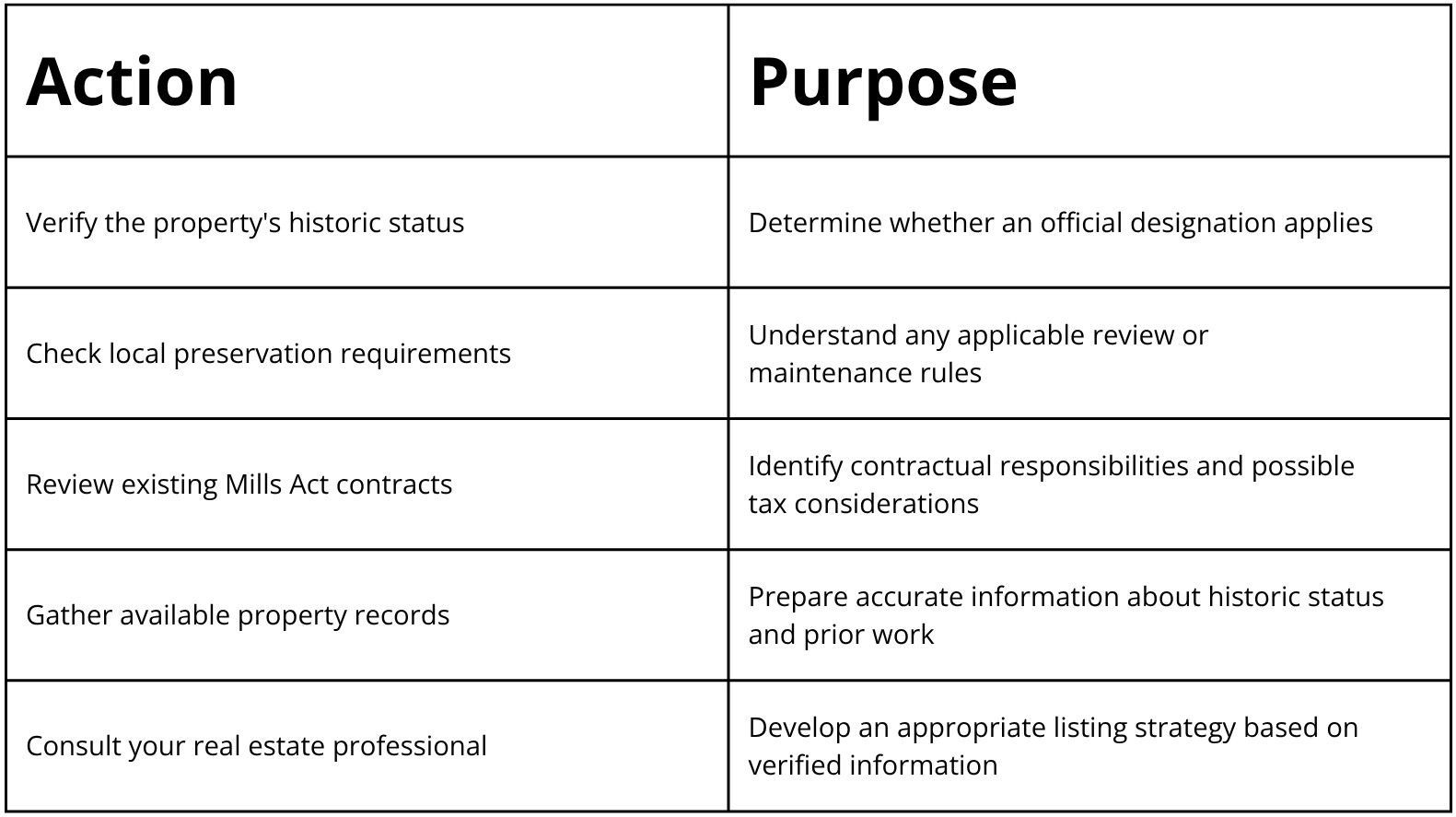
Now: Gather available designation records, preservation agreements, relevant approvals, and property documentation. Review this information with your real estate professional so the property's historic status and any applicable requirements can be described accurately.
✅ What You Should Do Right Now
❓ FAQ
Q: Is every older home considered a historic property?
A: No. A home's construction year or architectural appearance doesn't automatically establish an official historic designation. Historic status depends on applicable designation programs and criteria. Check relevant records with the local government or appropriate preservation agency.
Q: Can I renovate a historic property before selling?
A: Possibly. Whether additional review or approval is required depends on the property's designation, local ordinances, the type of work proposed, and any applicable agreements. Some changes may require preservation review, while others may not. Confirm the requirements before beginning work.
Q: Does a historic designation automatically lower my property taxes?
A: No. Historic designation alone doesn't automatically create a property tax reduction. Certain qualifying properties may receive tax benefits through California's Mills Act when an eligible local government has entered into a contract with the property owner. Eligibility, valuation, and benefits depend on the program and individual circumstances.
Q: Does a Mills Act contract transfer when the property is sold?
A: Generally, yes. Existing Mills Act contracts typically transfer to subsequent owners, who become subject to the agreement's rights and obligations. Sellers should review the actual contract and confirm its status with the appropriate local government before the transaction.
🔚 Conclusion
Owning an older property doesn't automatically mean it's officially historic, but a documented designation or preservation agreement may introduce additional considerations when selling. Understanding the property's status, any local requirements, and the terms of an existing Mills Act contract can help sellers prepare accurate information before listing. Reviewing these details early allows homeowners to approach the sale with a clearer understanding of the property's characteristics and any responsibilities associated with its historic status.
This blog is for general informational purposes only and does not constitute legal, tax, accounting, investment, or professional advice. Always consult with qualified professionals before making any decisions based on this content. School information including addresses, phone numbers, and emails was accurate as of the blog’s published date but may change without notice. Please verify directly with the school or institution. This content is provided “as is,” without warranties of any kind. If you are currently under an exclusive agreement with another real estate broker, this blog is not intended as a solicitation.
Contact Us