
Is That Really Your Agent Contacting You?
Is That Really Your Agent Contacting You?
Real estate scams can look surprisingly legitimate. A caller, text, email, website, or social media account may appear to come from a real estate professional or company you recognize. Recent California consumer alerts have warned about scams involving impersonation, suspicious payment requests, advance-fee schemes, and pressure to act quickly. If you are selling your home, verify unexpected requests independently before sending money, documents, or sensitive personal information.
📝 Introduction
Selling a home involves communication with real estate professionals, escrow representatives, lenders, inspectors, contractors, and other parties. That creates opportunities for scammers to make a fraudulent request look like part of a legitimate transaction. Recent California consumer alerts have warned about real estate and lending scams, including impersonation and advance-fee schemes. Sellers should know the warning signs and follow a simple rule during a transaction: when an unexpected request involves money, personal information, or an unfamiliar person, verify it before acting.
🔑 5 Things Sellers Should Know
1. A Familiar Name Doesn't Prove Who Is Contacting You
Scammers can use the names, photographs, license information, websites, email addresses, or other details of legitimate real estate professionals to make fraudulent communications appear authentic.
A professional-looking email, text, website, or social media account doesn't necessarily confirm that you're communicating with the person you think you are.
Now: If an unfamiliar person contacts you claiming to be involved in real estate, verify the individual's identity independently. If someone claims to represent a professional or company you're already working with, contact that person or company through contact information you already trust.
2. Be Cautious When Someone Wants Money Up Front
Recent California consumer alerts have warned about reemerging advance-fee scams involving consumer loans. Warning signs can include unusually favorable financing promises, claims that approval is guaranteed, or unexpected requests for money before promised services are performed.
An advance fee isn't automatically fraudulent, but an unexpected request for one deserves verification before you send money.
Now: Don't send money simply because someone tells you a payment is required immediately. Ask what the payment is for, who is receiving it, and why it is required. If something doesn't make sense, discuss it with your real estate professional and verify the request independently.
3. Urgency Can Be a Warning Sign
Some fraudulent communications are designed to make people react before they have time to verify the information. You may be told that something must be paid immediately, that a problem has suddenly appeared, or that failing to act could jeopardize a transaction.
Pressure can make an otherwise suspicious request appear more believable.
Now: Don't allow an unexpected deadline to prevent you from asking questions. If a request involves money, financial information, documents, or a major transaction change, stop and confirm it through a trusted contact method.
4. Treat Unexpected Payment Instructions Carefully
Money moving through a real estate transaction can attract fraud attempts. Unexpected requests for advance fees, cash payments, wire transfers, or changes to established payment instructions deserve additional verification.
A message may look authentic even when the sender isn't.
Now: Before acting on unexpected payment or transfer instructions, independently verify the request with the appropriate party using contact information you already know to be legitimate. Don't rely solely on the phone number, email address, or link contained in the unexpected message.
5. Your Real Estate Professional Can Help You Verify What Is Normal
Most homeowners don't sell property every day. Something that appears unusual to you may be a normal part of the transaction, while something that appears routine could deserve a closer look.
Your real estate professional can help you understand who should be contacting you, what transaction steps are expected, and whether an unusual request should be investigated further.
Now: If you're uncertain about a call, text, email, payment request, or person claiming to be connected with your sale, contact your real estate professional before responding or sending anything.
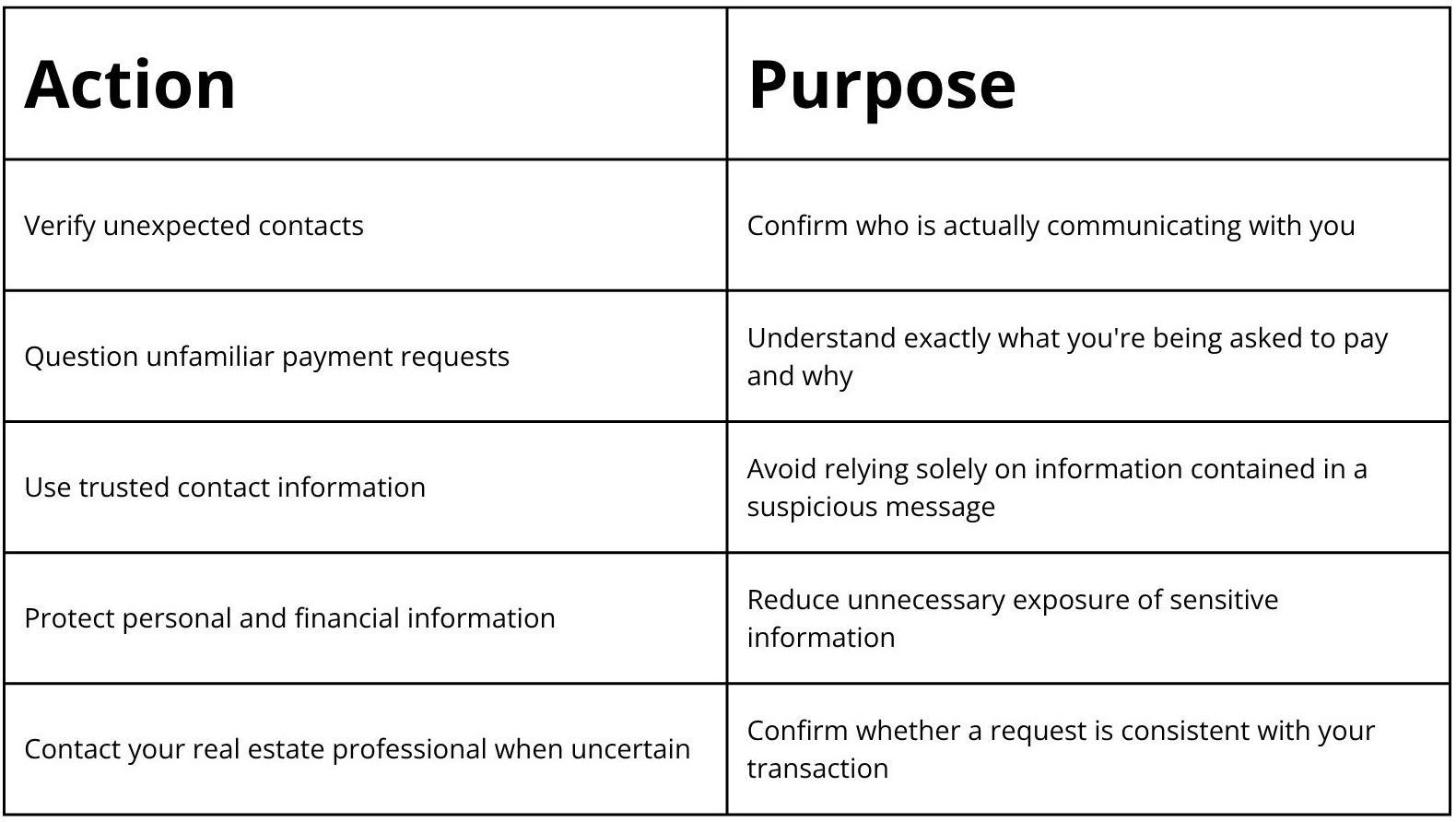
✅ What You Should Do Right Now
❓ FAQ
Q: How can I verify whether a California real estate agent is licensed?
A: California provides a public real estate license lookup that consumers can use to check the license information of real estate salespersons, brokers, and companies. Remember that finding a legitimate person's license doesn't prove that the person contacting you is actually that licensee, so identity should also be verified independently.
Q: What if an email or text looks like it came from someone involved in my sale?
A: Don't rely on appearance alone. If the message contains an unexpected request involving money, sensitive information, payment instructions, or a significant change to the transaction, contact the person or company separately using contact information you already know to be legitimate.
Q: Should I respond if someone pressures me to act immediately?
A: Pressure to act quickly can be a warning sign. Take the time to understand the request and independently confirm the identity of the person contacting you before providing money, documents, or sensitive information.
Q: What should I do if I believe I've encountered a real estate scam?
A: Stop communicating through the suspicious contact method and preserve relevant emails, texts, documents, payment information, and other records. Contact your real estate professional and the appropriate financial institution when applicable. Depending on the circumstances, suspected fraud can also be reported to the appropriate authorities or regulatory agency.
🔚 Conclusion
Real estate scams don't always arrive looking suspicious. They can use professional language, legitimate names, familiar logos, convincing websites, and information connected with real estate transactions. If you're selling your home, make verification part of your transaction routine. When an unexpected request involves money, personal information, payment instructions, or an unfamiliar contact, confirm who you're dealing with before taking action.
This blog is for general informational purposes only and does not constitute legal, tax, accounting, investment, or professional advice. Always consult with qualified professionals before making any decisions based on this content. School information including addresses, phone numbers, and emails was accurate as of the blog’s published date but may change without notice. Please verify directly with the school or institution. This content is provided “as is,” without warranties of any kind. If you are currently under an exclusive agreement with another real estate broker, this blog is not intended as a solicitation.
Contact Us