

Home Staging Has Changed. Here’s What Matters
Updated November 17, 2026

Home Staging Has Changed. Here’s What Matters
Home staging is about more than decorative details. Thoughtful furniture placement, focused room preparation, professional photography, and accurate virtual presentations can help buyers understand a property's layout and characteristics. While staging may influence buyer interest, it does not guarantee a faster sale or higher price.
📝 Introduction
Effective home staging begins with presenting a property clearly and making its rooms easier to evaluate. Furniture arrangement, lighting, cleanliness, and photography all contribute to how a home appears online and during showings. Sellers do not necessarily need elaborate furnishings or expensive technology upgrades to improve presentation. Instead, the most useful approach depends on the home's condition, layout, existing furniture, marketing budget, and the features buyers are likely to evaluate.
🔑 5 Pro Moves for Effective Home Staging
1. Focus on the Most Impactful Rooms
The living room and primary bedroom are important staging priorities, with the kitchen also playing a significant role in how buyers evaluate a home.
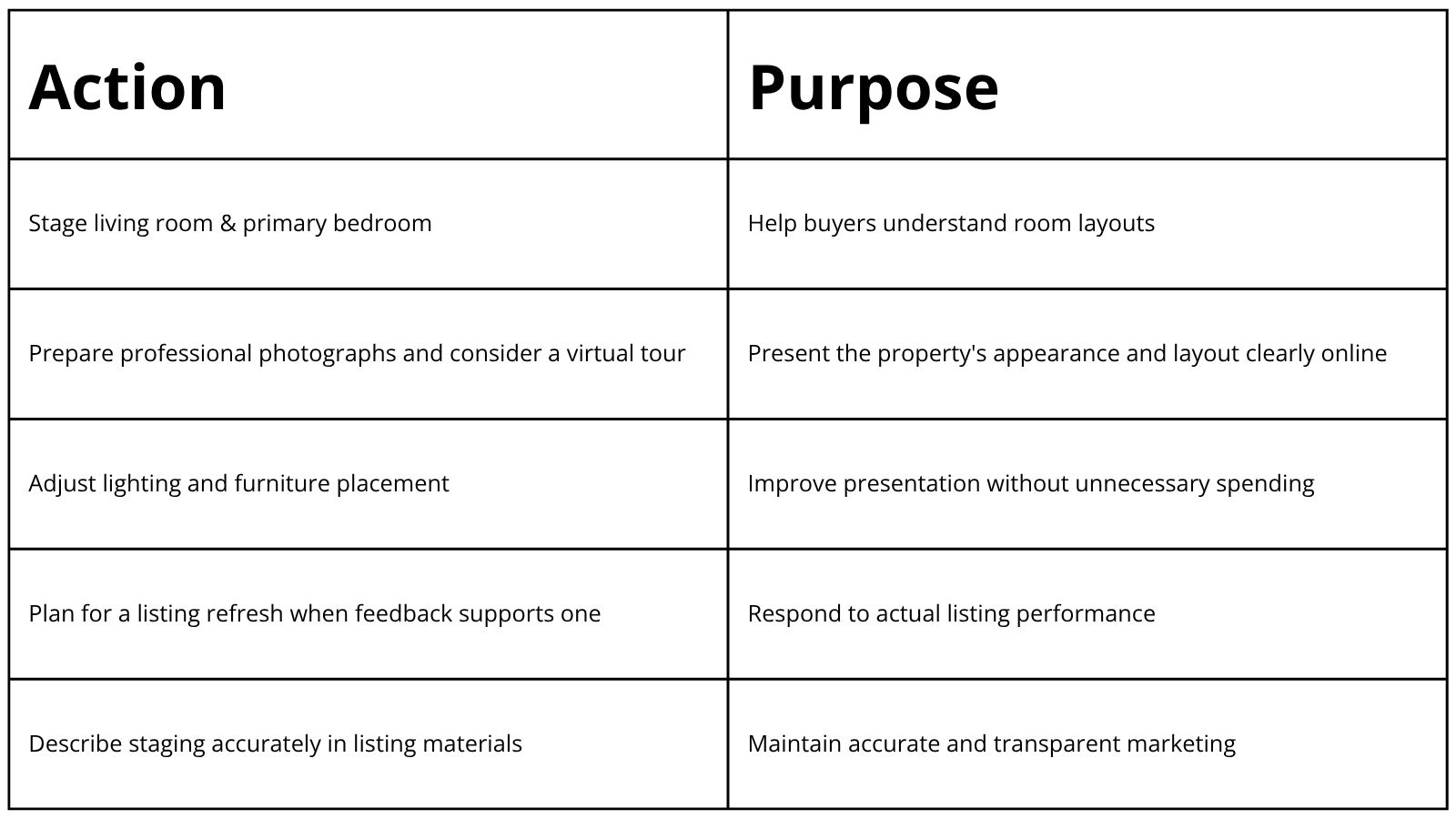
Now: Prioritize the living room and primary bedroom, using clean surfaces, appropriately sized furniture, and clear walking paths to present each room's layout.
2. Pair Professional Photography With Helpful Tours
Buyers often begin evaluating properties through online photos. Clear photography and, when appropriate, video or 3D tours can help communicate room dimensions, connections between spaces, and property characteristics.
Now: Arrange professional photography after staging is complete, and consider a video or 3D walkthrough when it would help buyers better understand the floor plan.
3. Use Lighting and Furniture Placement to Improve Presentation
Lighting, furniture scale, and room arrangement can influence how spacious and functional a property appears. Adding smart-home technology is not necessary for every staging plan.
Now: Use available natural light, replace nonworking bulbs, and adjust furniture placement before spending money on technology upgrades that may offer limited marketing benefit.
4. Keep Your Listing Fresh If It Lingers
A listing's presentation may need attention when buyer activity or showing feedback indicates that certain rooms, photographs, or property details are not being communicated effectively.
Now: Review listing activity and showing feedback with your Realtor before deciding whether to update photographs, adjust staging, or reconsider other parts of the marketing strategy. Do not rely on an automatic two-to-three-week deadline.
5. Describe and Disclose Your Staging Accurately
Marketing should reflect the property's actual condition and distinguish physical staging from digitally altered images. Virtual staging can illustrate furniture placement, but it must not misrepresent permanent property characteristics.
Now: Describe professional staging only when it has been provided. Clearly identify virtually staged photographs and make unaltered originals available in accordance with applicable advertising requirements and MLS rules.
✅ What You Can Do Now
❓ FAQ
Q: Does professional staging really move the needle?
A: It can. Industry survey findings suggest staging helps many buyers visualize a property's layout and may contribute to stronger offers or shorter marketing periods in some transactions. However, results vary by property, pricing, market conditions, and staging costs.
Q: If I already have basic furniture, do I still need professional staging?
A: Not always. Existing furniture may be suitable when it complements the room's dimensions and allows buyers to evaluate the space comfortably. A staging consultation, furniture rearrangement, or selective removal of items may be sufficient.
Q: Can sellers use virtually staged photographs in their listings?
A: Yes, subject to applicable advertising laws and MLS requirements. Materially altered images should be identified, and the original photographs must be made available as required. Virtual staging should not change or conceal permanent property features in a misleading way.
🔚 Conclusion
Home staging is most useful when it supports a clear and accurate presentation of the property. Concentrating on important rooms, improving lighting and furniture arrangement, preparing professional photographs, and reviewing actual buyer feedback can help sellers make informed marketing decisions. Digital tools may provide additional presentation options, but accurate property representation remains essential. The goal is to help prospective buyers understand the home while keeping staging decisions aligned with the property's condition and the seller's budget.
This blog is for general informational purposes only and does not constitute legal, tax, accounting, investment, or professional advice. Always consult with qualified professionals before making any decisions based on this content. School information including addresses, phone numbers, and emails was accurate as of the blog’s published date but may change without notice. Please verify directly with the school or institution. This content is provided “as is,” without warranties of any kind. If you are currently under an exclusive agreement with another real estate broker, this blog is not intended as a solicitation.
Contact Us