
Can an Updated Hazard Report Delay Your Home Sale?
Published November 26, 2026
Can an Updated Hazard Report Delay Your Home Sale?
A home may already be under contract when new or corrected natural hazard information becomes available. An updated report, revised government map, or previously unidentified classification can raise questions about existing disclosures and transaction requirements. For sellers, understanding how to review the information, communicate relevant changes, and address applicable deadlines is important before closing.
📝 Introduction
Once a property enters escrow, buyers and sellers continue reviewing documents and completing transaction requirements. During this period, updated natural hazard information may become available or a discrepancy may be identified in an earlier report. These situations do not automatically establish a property defect or require the transaction to be canceled. However, the nature of the information, when it became available, and whether a disclosure requires correction can affect the steps that follow. For homeowners, understanding how updated information should be evaluated and communicated can help address questions before the scheduled closing.
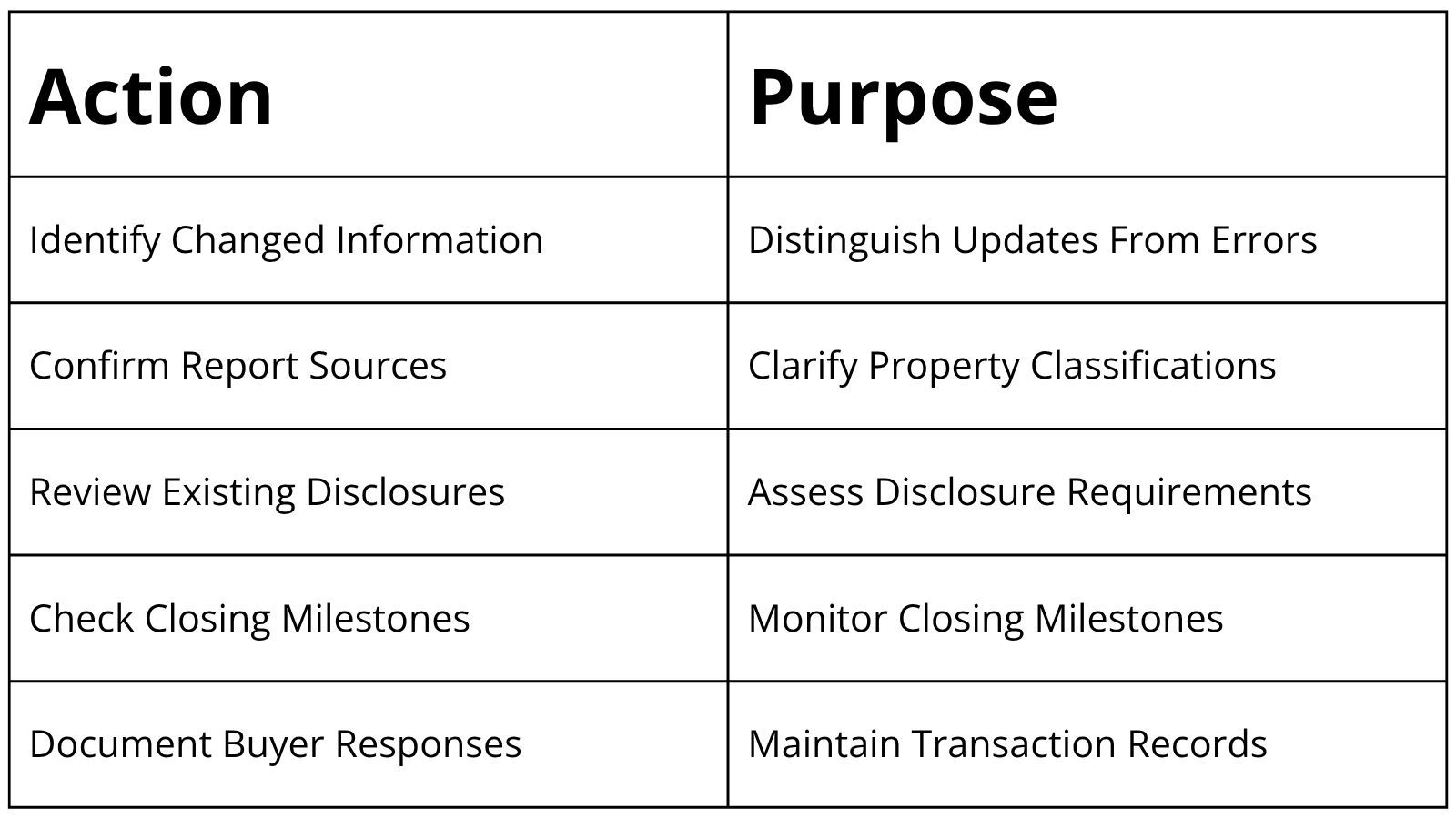
🔑 5 Pro Moves When Hazard Information Changes During Escrow
1. Identify What Information Has Changed
Not every difference between natural hazard reports represents a newly designated hazard. A report may have been prepared using updated mapping information, a corrected property reference, or a different reporting date. Understanding the nature of the discrepancy is an important starting point.
Now: Compare the earlier disclosure with the newly received information. Identify the specific difference, relevant dates, and whether the change involves a corrected report, a new classification, or additional information.
2. Confirm the Report's Mapping and Property Information
Natural hazard reports rely on designated sources of government mapping information. Differences involving parcel identification, mapping boundaries, or map revisions may require clarification from the report provider or appropriate public agency.
Now: Verify the property address, assessor's parcel number, and report date. Contact the disclosure provider for clarification when information appears inconsistent, and request supporting documentation when appropriate.
3. Review Relevant Seller Disclosures
Natural hazard reports identify whether a property falls within certain mapped hazard areas. When new or corrected information becomes available, sellers should review how it compares with the documents previously provided to buyers. Any discrepancies or additional concerns should be evaluated before the transaction proceeds.
Now: Review the existing disclosure package with your listing agent. Identify whether the new information changes an earlier representation or raises additional questions that need clarification.
4. Understand How Updated Information May Affect Closing
New or corrected hazard information during escrow may lead buyers to request clarification, additional documents, or further investigation. Depending on the circumstances, these requests could affect the transaction schedule. However, receiving an updated report does not automatically mean closing will be delayed.
Now: Coordinate with your listing agent to review the updated information, communicate relevant changes, and monitor any outstanding questions before the scheduled closing.
5. Coordinate Buyer Questions and Transaction Records
Updated hazard information may lead to requests for clarification or additional documentation. These questions should be addressed using verified information rather than unsupported conclusions about future property conditions, insurance availability, or the effect of a reported change on the transaction.
Now: Keep the relevant report versions, written clarifications, delivery confirmations, and transaction communications together. Coordinate buyer responses through your listing agent and consult the appropriate professionals when technical or transaction questions arise.
✅ What Can You Do?
❓ FAQ
Q: Does new hazard information always require a revised disclosure?
A: Not necessarily. Some updates may involve corrected property details, revised maps, or additional information that does not materially change an earlier report. Sellers should review the differences with their listing agent to determine whether clarification or updated documentation is appropriate.
Q: What happens if a buyer has questions about an updated hazard report?
A: Buyers may request clarification or additional information about a newly identified hazard classification or report discrepancy. Sellers can work with their listing agent and the disclosure provider to review the information and respond with available documentation. The circumstances of the transaction will determine whether additional steps are necessary.
Q: Will an updated hazard report automatically delay closing?
A: No. An updated report does not automatically require a closing delay. However, requests for clarification, additional documentation, further evaluation, or agreed transaction steps may affect the schedule. Sellers should review the circumstances with their listing agent and other appropriate professionals.
🔚 Conclusion
New natural hazard information during escrow can introduce questions about report accuracy, disclosure documentation, and transaction timing. These situations should be evaluated according to the information received, the accuracy of existing records, and the circumstances of the sale. By verifying changes, reviewing existing disclosures, and coordinating communication through the appropriate professionals, sellers can respond with accurate information and a clearer understanding of the steps to address before closing.
This blog is for general informational purposes only and does not constitute legal, tax, accounting, investment, or professional advice. Always consult with qualified professionals before making any decisions based on this content. School information including addresses, phone numbers, and emails was accurate as of the blog’s published date but may change without notice. Please verify directly with the school or institution. This content is provided “as is,” without warranties of any kind. If you are currently under an exclusive agreement with another real estate broker, this blog is not intended as a solicitation.
Contact Us