
Why Some Homes Are Taking Longer to Receive Offers
Updated November 17, 2026

Why Some Homes Are Taking Longer to Receive Offers
The time between listing a property and receiving an offer varies by location, price range, condition, and available competition. Sellers who review showing activity, buyer inquiries, comparable sales, and local market conditions can better determine whether adjustments to their selling strategy are appropriate.
📝 Introduction
An active listing may receive online views, inquiries, and showings without generating an immediate offer. That gap does not automatically indicate whether the asking price is appropriate or how prospective buyers are evaluating the property. Market conditions can also vary across cities, property types, and seasons, so broader housing headlines may not accurately describe an individual listing. Sellers can use recent comparable sales, competing properties, showing activity, and recurring feedback to evaluate performance and establish reasonable points for reviewing their selling strategy.
🔑 5 Ways Sellers Can Evaluate Listing Activity Before Making Changes
1. Review the Full Activity Picture
Online views, saves, inquiries, and showing requests reflect different forms of interest, but none guarantees that a buyer will submit an offer.
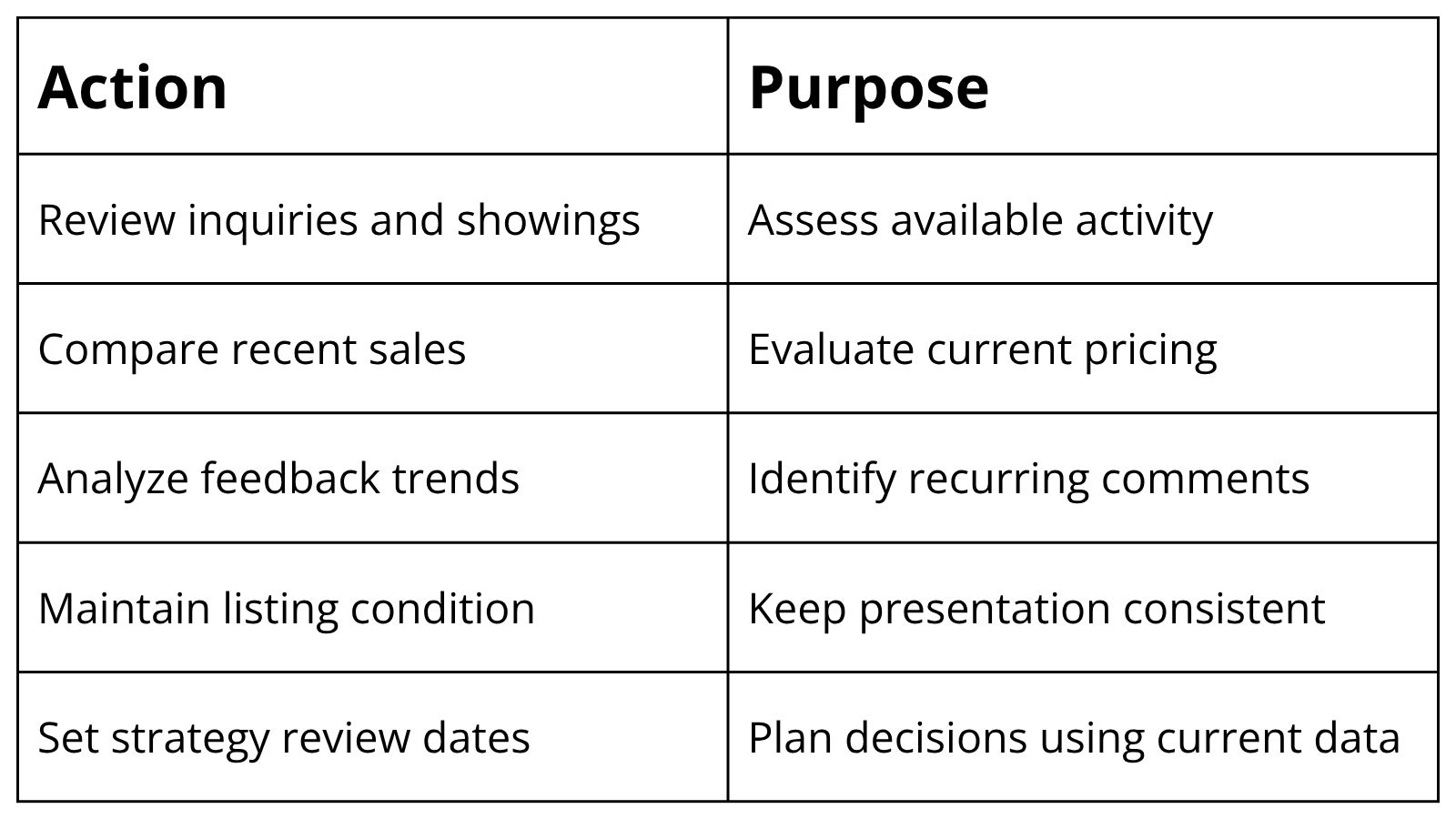
Now: Review available online engagement, showing activity, and follow-up inquiries with your real estate professional to better understand how buyers are responding to the listing.
2. Evaluate Price Against Current Competition
A lack of immediate offers does not automatically establish that a property is overpriced, but pricing should be evaluated as new market information becomes available.
Now: Compare similar active listings, pending properties, and recently closed sales before deciding whether an asking-price adjustment is warranted.
3. Track Feedback Patterns
Recurring comments may identify concerns about property condition, presentation, price, or other features, although individual feedback does not represent every potential buyer.
Now: Consider repeated observations alongside showing activity and competing property information before making changes.
4. Keep the Home Prepared During the Listing Period
Property condition, presentation, and showing availability remain relevant while a home is being marketed.
Now: Maintain reasonable showing access, routine upkeep, and accurate listing photographs throughout the marketing period.
5. Establish Regular Strategy Reviews
A planned schedule for reviewing listing performance can help sellers evaluate new information without reacting to every individual change in activity.
Now: Agree with your real estate professional on appropriate times to review showing activity, current competition, pricing, and marketing performance.
✅ What You Should Do Right Now
❓ FAQ
Q: Are homes taking longer to receive offers in every market?
A: No. Market pace varies by location, property type, price range, and time period. Sellers should review recent local days-on-market information and comparable properties rather than assume that all housing markets are experiencing the same conditions.
Q: Should sellers worry if no offers arrive immediately?
A: Not necessarily. The time required to receive an offer varies. Showing activity, asking price, competing inventory, property condition, and local market trends can provide useful context when evaluating a listing's performance.
Q: When should sellers consider adjusting their asking price?
A: There is no single timeline that applies to every property. Sellers can review recent comparable sales, current competition, showing activity, and buyer feedback with their real estate professional before determining whether a pricing adjustment is appropriate.
🔚 Conclusion
The time it takes to receive an offer varies among properties and local real estate markets. A period without offers does not automatically mean that a home is incorrectly priced, just as waiting longer does not guarantee that an offer will arrive. Sellers can review online engagement, showing activity, buyer feedback, and comparable properties to better understand how their listing is performing. Establishing regular review points with a real estate professional can also help identify when changes to pricing, presentation, or marketing deserve consideration. This approach keeps selling decisions connected to current market information and the seller's individual objectives.
This blog is for general informational purposes only and does not constitute legal, tax, accounting, investment, or professional advice. Always consult with qualified professionals before making any decisions based on this content. School information including addresses, phone numbers, and emails was accurate as of the blog’s published date but may change without notice. Please verify directly with the school or institution. This content is provided “as is,” without warranties of any kind. If you are currently under an exclusive agreement with another real estate broker, this blog is not intended as a solicitation.
Contact Us