
Why Asking and Selling Prices Do Not Always Match
Updated November 17, 2026

Why Asking and Selling Prices Do Not Always Match
An asking price establishes where a home enters the market, but the final selling price depends on buyer interest, comparable sales, property condition, and negotiated terms. Understanding the difference helps sellers make informed pricing and offer decisions.
📝 Introduction
A home's listing price and final selling price are not always the same. Some properties sell above asking, while others close at or below their advertised prices. These outcomes depend on local supply, buyer demand, property characteristics, and the terms negotiated during the transaction. For sellers, it is important to look beyond broad market averages and evaluate how comparable properties are performing. Reviewing sale-to-list-price relationships, buyer feedback, and estimated net proceeds can help sellers establish realistic expectations and respond appropriately throughout the listing process.
🔑 5 Pro Moves for Sellers Evaluating Asking and Selling Prices
1. Study Local Sale-to-List Results
Recent sales can reveal how asking prices compare with final transaction prices in your market.
Now: Review comparable closed sales with your Realtor. Compare original asking prices, final listing prices, selling prices, and relevant property differences before drawing conclusions.
2. Set a Supportable Asking Price
Overpricing can lead to extended market time and potential price adjustments.
Now: Use recent comparable sales, active competition, property condition, and local demand to establish an asking price. Listing below estimated market value is not automatically the right strategy for every property.
3. Compare Offers by Net Proceeds
The highest purchase price may not produce the highest amount received by the seller after negotiated credits and transaction expenses.
Now: Review purchase price, closing cost contributions, repair credits, financing terms, and estimated selling expenses before accepting an offer.
4. Present Property Condition and Improvements Clearly
First impressions are crucial in a competitive market.
Now: Use accurate photography, appropriate staging, and documented property information. Highlight completed renovations, energy-efficient equipment, and maintenance records without assuming every improvement adds an equal amount to the selling price.
5. Adjust Based on Measurable Market Response
Staying informed allows for timely adjustments to your strategy.
Now: Monitor showing activity, buyer feedback, competing listings, and newly closed sales. Review potential pricing or marketing changes when the available information supports an adjustment.
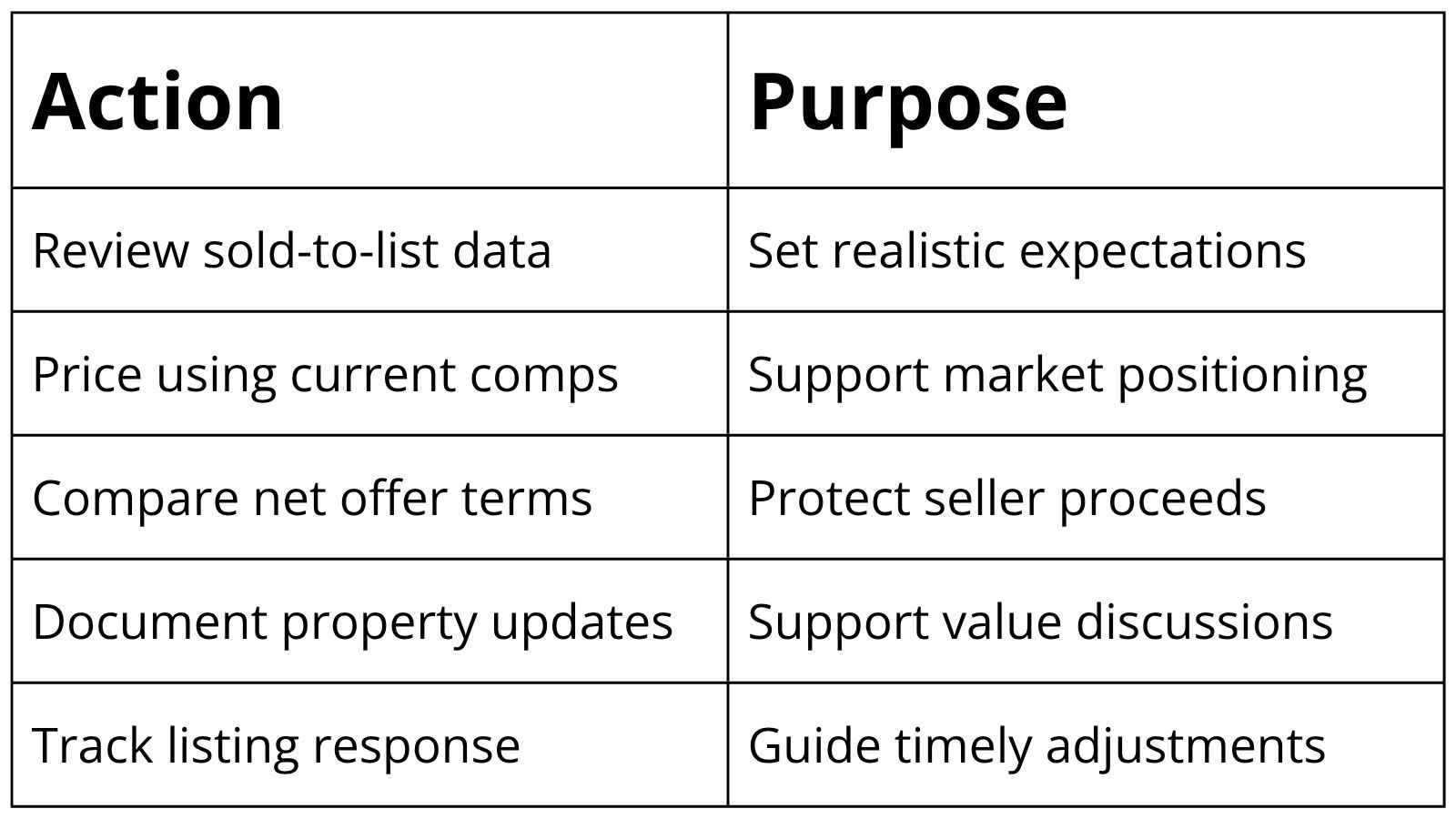
✅ What You Can Do Now
❓ FAQ
Q: How do I determine the right price for my home?
A: Work with your Realtor to prepare a comparative market analysis using recent sales, active listings, property condition, and relevant market trends. The recommended asking price should reflect the property's competitive position rather than relying on a broad national average.
Q: Are buyer incentives effective in today's market?
A: They may be useful when they address a specific buyer concern. However, seller credits and other concessions can reduce net proceeds and may be subject to lender limits. Compare the financial effect of an incentive with other negotiating options before agreeing to it.
Q: Why might a home sell below its original asking price?
A: A property may sell below its original asking price because of changes in market conditions, competing inventory, property condition, or negotiations. An initial asking price also may have exceeded what comparable sales supported. The appropriate interpretation depends on the property's pricing history and local market activity.
🔚 Conclusion
The difference between asking price and selling price is an important part of evaluating a home sale. While market reports provide useful context, they do not determine the outcome for an individual property. Sellers who study local sale-to-list trends, establish supportable pricing, present their homes accurately, and compare offers based on net proceeds can make better decisions throughout the selling process. A thoughtful approach to pricing and negotiation provides a stronger basis for evaluating the final result.
This blog is for general informational purposes only and does not constitute legal, tax, accounting, investment, or professional advice. Always consult with qualified professionals before making any decisions based on this content. School information including addresses, phone numbers, and emails was accurate as of the blog’s published date but may change without notice. Please verify directly with the school or institution. This content is provided “as is,” without warranties of any kind. If you are currently under an exclusive agreement with another real estate broker, this blog is not intended as a solicitation.
Contact Us