

Which Market Trends Actually Matter When Selling?
Updated November 17, 2026

Which Market Trends Actually Matter When Selling?
Recent housing research shows that homeownership patterns are changing, but demographic trends should not determine how a property is marketed or which buyers are encouraged to consider it. Sellers can use market research alongside local pricing data, property condition, and objective offer criteria to make informed decisions.
📝 Introduction
Homeownership patterns and buyer activity continue to change, but broad demographic trends do not determine who will be interested in a specific property. Sellers can use market research to understand current conditions while focusing their listing strategy on local demand, comparable sales, property condition, and accurate marketing. By understanding these factors, sellers can present their homes effectively, reach interested buyers broadly, and evaluate offers using consistent criteria.
🔑 5 Pro Moves for Sellers Using Homeownership Trends
1. Review Market Trends Without Limiting Buyers
Broader market research can provide context, but it should not determine who may be interested in a particular property.
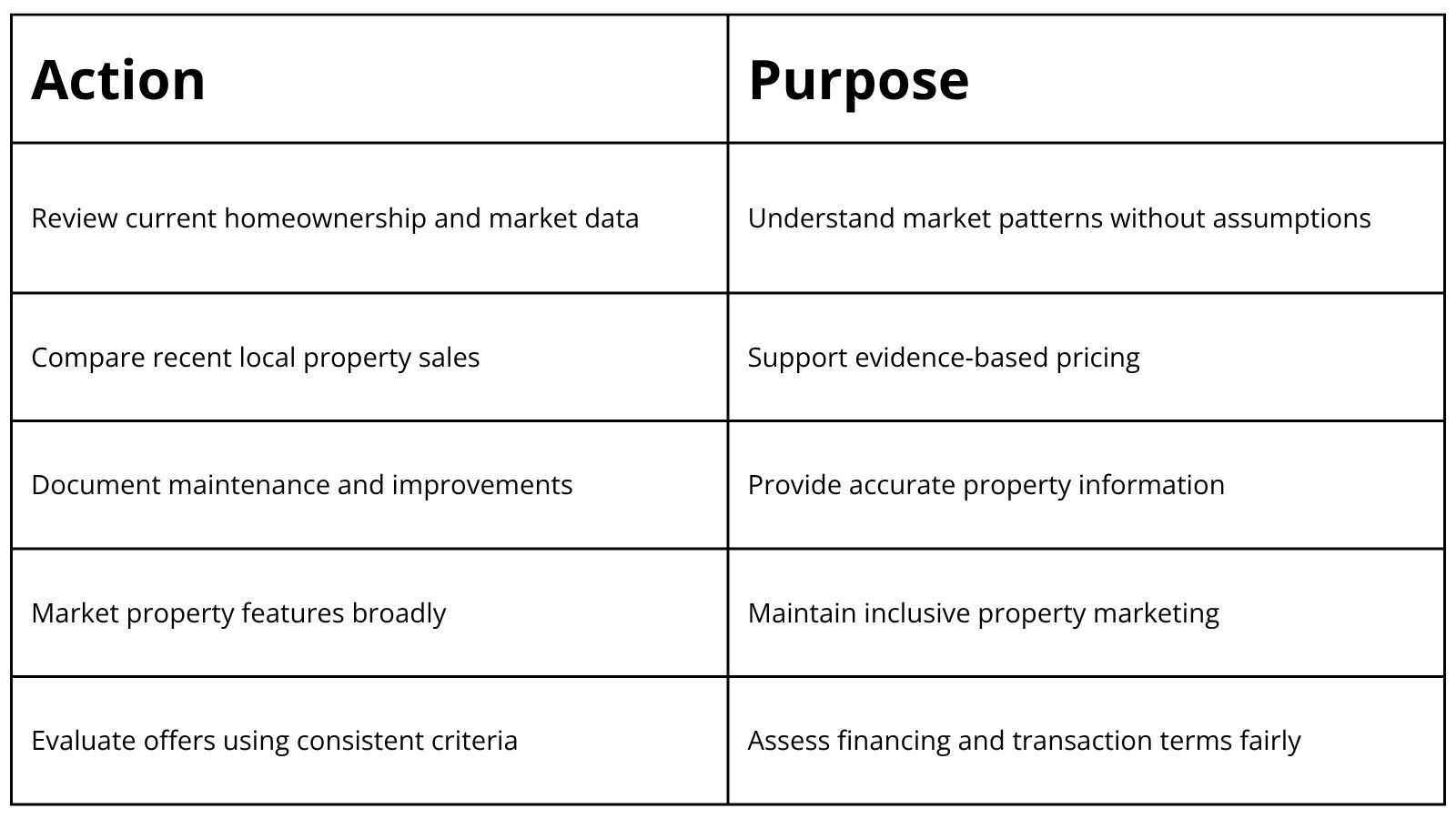
Now: Use local sales activity and property characteristics to develop marketing that presents the home accurately and reaches interested buyers broadly.
2. Document Maintenance and Updates Over Time
Long-term ownership does not automatically increase property value, but maintenance and improvement records can provide useful information.
Now: Organize available records for repairs, permitted improvements, major systems, warranties, and maintenance to support accurate property descriptions.
3. Price for Local Conditions
A buyer's age or previous ownership experience does not determine what a home is worth.
Now: Work with your Realtor to evaluate comparable sales, competing listings, property condition, and current buyer activity when developing a pricing strategy.
4. Describe Features Without Buyer Assumptions
Property preferences vary, regardless of a buyer's age, household circumstances, or previous homeownership experience.
Now: Highlight verified property features such as layout, condition, storage, accessibility features where present, and completed improvements without suggesting that the home is intended for a particular buyer group.
5. Evaluate Offers Using Consistent Criteria
The strength of a purchase offer depends on its financial and contractual terms rather than the buyer's demographic profile.
Now: Review financing documentation, proof of funds when appropriate, contingencies, deposits, and closing timelines using consistent standards for all offers.
✅ What You Can Do Now
❓ FAQ
Q: How do changing homeownership patterns affect my listing strategy?
A: National trends can provide context about the housing market, but local demand, property condition, comparable sales, and pricing remain more useful when developing a strategy for a specific home.
Q: Do repeat buyers or cash buyers always make stronger offers?
A: No. Every offer should be evaluated individually. Cash purchases may avoid certain mortgage-related conditions, but financing arrangements alone do not determine whether an offer is the most suitable for the seller.
Q: Should sellers market their homes toward particular age groups or buyer backgrounds?
A: No. Housing marketing should focus on accurate property features and remain accessible without excluding or discouraging prospective buyers based on protected characteristics or assumptions about their backgrounds.
🔚 Conclusion
Homeownership patterns provide useful information about how the housing market is changing, but they do not determine the right buyer for a particular property. Sellers can benefit from understanding broader research while keeping decisions grounded in local comparable sales, property condition, accurate marketing, and objective offer terms. A well-supported listing strategy focuses on presenting the home's value clearly and treating prospective buyers consistently throughout the selling process.
This blog is for general informational purposes only and does not constitute legal, tax, accounting, investment, or professional advice. Always consult with qualified professionals before making any decisions based on this content. School information including addresses, phone numbers, and emails was accurate as of the blog’s published date but may change without notice. Please verify directly with the school or institution. This content is provided “as is,” without warranties of any kind. If you are currently under an exclusive agreement with another real estate broker, this blog is not intended as a solicitation.
Contact Us