
When Should Sellers Offer Buyer Incentives?
Updated November 18, 2026

When Should Sellers Offer Buyer Incentives?
Buyer incentives can help address certain financing or transaction concerns, but offering them is not always necessary. Sellers who review local competition, buyer feedback, and the financial impact of concessions can make informed decisions about when incentives may support their selling strategy.
📝 Introduction
Homebuilders frequently offer mortgage rate buydowns, closing cost assistance, and other promotions, but resale sellers face different financial considerations. Depending on local market conditions, buyers may compare these incentives with the pricing, condition, and features of existing homes. However, offering a credit before understanding buyer interest may create unnecessary expenses. Sellers should evaluate their property's competitive position, estimate the cost of potential concessions, and consider when an incentive would address a specific concern. A thoughtful approach connects pricing, presentation, timing, and transaction terms to the seller's overall goals.
🔑 5 Pro Moves for Sellers Considering Buyer Incentives
1. Evaluate Incentives Before Offering Them
Buyer incentives may help address certain financing or closing cost concerns, but they can reduce seller proceeds and are not necessary for every listing.
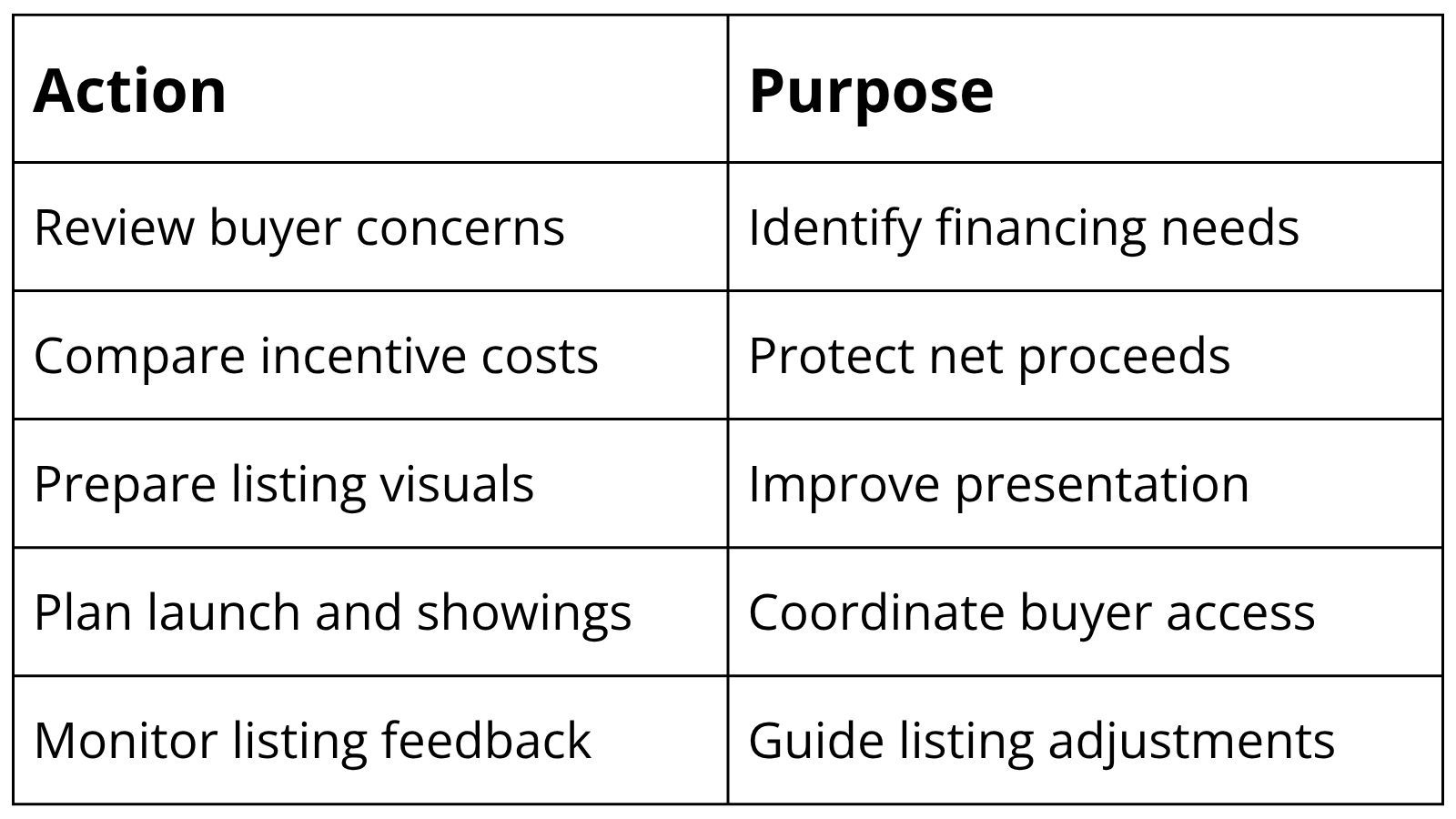
Now: Review buyer feedback, competing listings, and available financing options before offering closing cost credits or mortgage rate buydowns. Confirm any proposed incentive with the appropriate lender.
2. Prepare Strong Listing Visuals Before Launch
Property presentation helps buyers evaluate a home's layout, condition, and features. Professional marketing can support visibility without requiring immediate financial concessions.
Now: Prepare accurate photographs, appropriate staging, and property descriptions before listing. Consider video tours or additional visuals when they help communicate the home's characteristics.
3. Choose Launch Dates Strategically
Listing timing can influence initial exposure, but no single weekday guarantees better offers or a faster sale.
Now: Coordinate the listing launch with completed marketing materials, showing availability, and local buyer activity. Schedule open houses when appropriate for the property and market.
4. Price for Impact With Flexibility
Competitive pricing establishes the property's position among similar homes. Seller incentives may complement pricing in some negotiations, but maintaining a higher asking price does not necessarily protect net proceeds.
Now: Review recent comparable sales, buyer feedback, and competing properties. Compare the financial impact of a price adjustment with a proposed seller credit before deciding which option supports your goals.
5. Review Activity Before Refreshing Marketing
Listing activity may change as competing inventory, buyer demand, and market conditions shift. Marketing updates should respond to meaningful information rather than an automatic schedule.
Now: Monitor inquiries, showing requests, online engagement, and buyer feedback. Consider changes to presentation, pricing, or incentives when recurring patterns suggest an adjustment may be useful.
✅ What You Can Do Now
❓ FAQ
Q: Do incentives reduce my net sale price?
A: Seller-funded incentives generally reduce net proceeds by their cost, even when the agreed purchase price remains unchanged. Their financial impact depends on the amount, contract terms, and other selling expenses. Sellers should review the estimated proceeds before agreeing to a concession.
Q: Should I expect slower sales right now?
A: Not necessarily. Selling timelines vary by location, property type, price range, and available inventory. Sellers should review recent comparable sales and local listing activity rather than assume national trends apply equally to their properties.
Q: When should sellers consider offering a buyer incentive?
A: An incentive may be worth considering when buyer feedback or negotiations identify a specific financial concern that the concession could address. Before offering one, sellers should compare its cost with a price adjustment, review financing restrictions, and evaluate the effect on estimated net proceeds.
🔚 Conclusion
Buyer incentives can be useful in certain real estate transactions, but their value depends on timing, cost, and market conditions. Sellers do not necessarily need to match builder promotions or introduce concessions immediately after listing. By reviewing local competition, preparing accurate marketing materials, monitoring buyer feedback, and calculating the financial impact of proposed terms, homeowners can decide whether an incentive supports their selling objectives. The goal is to make each adjustment based on relevant information rather than assumptions about buyer behavior.
This blog is for general informational purposes only and does not constitute legal, tax, accounting, investment, or professional advice. Always consult with qualified professionals before making any decisions based on this content. School information—including addresses, phone numbers, and emails—was accurate as of the blog’s published date but may change without notice. Please verify directly with the school or institution. This content is provided “as is,” without warranties of any kind. If you are currently under an exclusive agreement with another real estate broker, this blog is not intended as a solicitation.
Contact Us