
When Listings Take Longer, Here's How to Stand Out
Updated November 17, 2026

When Listings Take Longer, Here's How to Stand Out
Rising housing inventory can create more choices for buyers, but the time it takes to sell a home varies by location, price range, and property characteristics. Sellers who monitor market response and adjust their strategies thoughtfully can improve how their listings compete.
📝 Introduction
Housing conditions can change even when a property remains the same. In some markets, increasing inventory gives buyers more listings to compare, while slower demand can extend marketing periods. However, national trends do not necessarily reflect what is happening in a particular neighborhood or price range. Sellers may experience slower activity because of pricing, competing properties, condition, showing access, or changing buyer expectations. Understanding these factors helps identify whether a listing needs adjustments and which changes are most relevant. A thoughtful approach to pricing, presentation, and communication can support better decisions throughout the selling process.
🔑 5 Pro Moves for Sellers in a Slower Market
1. Price to Attract Serious Buyers
Homes priced above comparable properties may receive less attention, particularly when buyers have several alternatives.
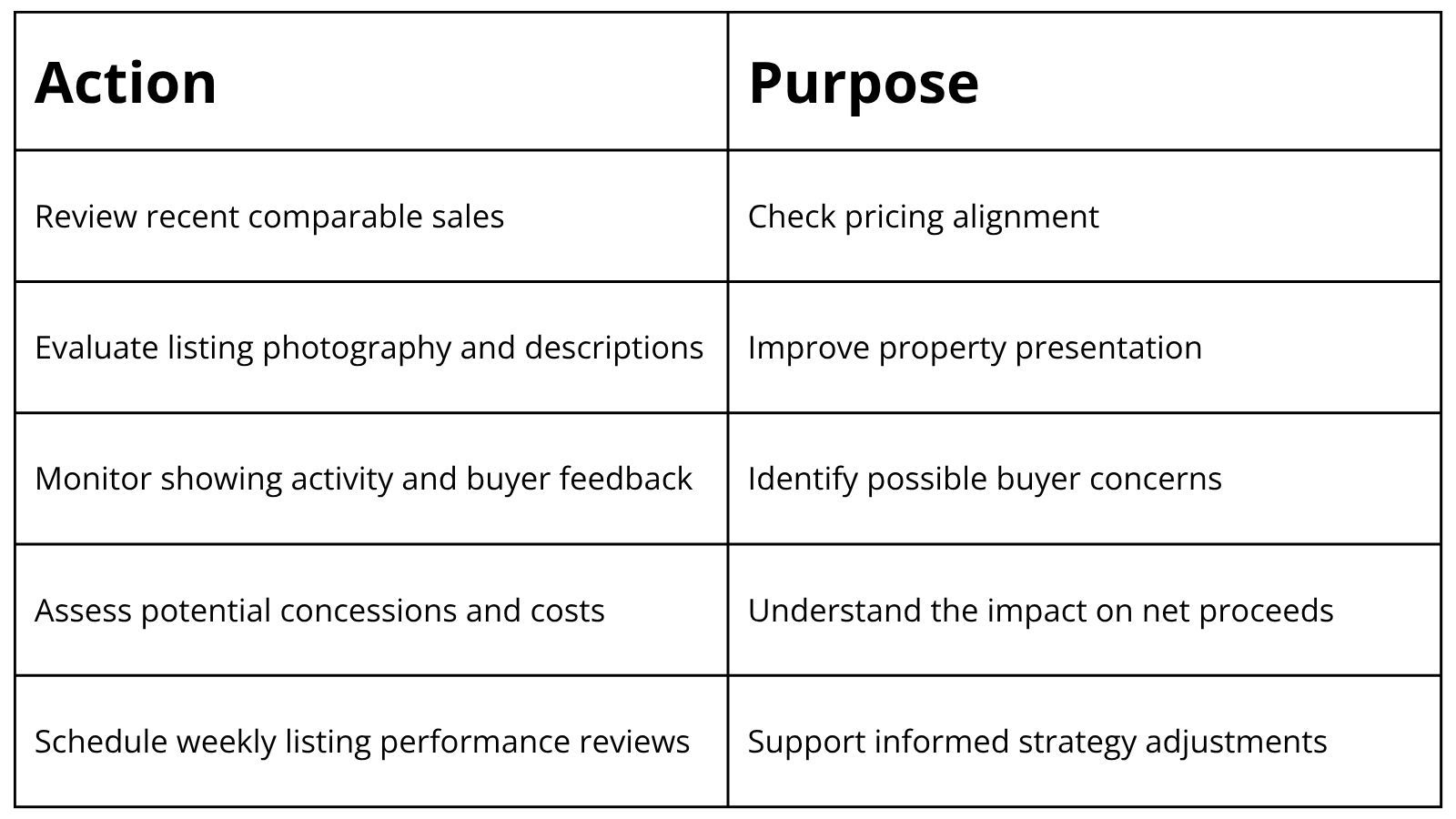
Now: Review recent closed sales, competing active listings, and property-specific differences with your agent before deciding whether a price adjustment is appropriate.
2. Invest in First-Impression Marketing
Photography, listing descriptions, and property presentation influence how buyers initially evaluate a home.
Now: Use accurate professional photography, informative video tours when appropriate, and clear descriptions that highlight the home's condition, layout, and relevant features.
3. Prepare to Refresh Strategically
A decline in activity may indicate that some aspect of the listing needs review, but a specific number of days does not automatically require a change.
Now: Evaluate online engagement, showings, buyer feedback, and competing listings before updating photographs, staging, marketing details, or pricing.
4. Evaluate Seller Concessions Carefully
Closing cost credits and other negotiated terms may appeal to some buyers, but they can affect the seller's net proceeds and are subject to financing requirements.
Now: Discuss potential closing cost credits, interest-rate buydown arrangements, or possession flexibility with your agent, and compare their financial impact with other pricing and negotiation options.
5. Stay Data-Driven With Weekly Monitoring
Consistent tracking can help sellers distinguish temporary changes in activity from more meaningful market feedback.
Now: Review listing traffic, showing feedback, competing properties, and recent sales weekly with your Realtor. Make adjustments when the information supports a change.
✅ What You Can Do Now
❓ FAQ
Q: Are homes taking longer to sell everywhere?
A: No. National housing reports can show broader changes, but selling timelines vary considerably by city, neighborhood, property type, condition, and price range. Local comparable sales provide more relevant context.
Q: Should I lower my price immediately if my home receives little interest?
A: Not necessarily. Review competing listings, showing feedback, marketing quality, and pricing before making changes. If the asking price is not aligned with market conditions, an adjustment may be appropriate.
Q: Can seller concessions help when a home takes longer to sell?
A: They can in certain transactions. Closing cost credits or other negotiated terms may address buyer concerns, but sellers should review their costs, financing limitations, and effect on net proceeds before agreeing.
🔚 Conclusion
A longer listing period does not automatically mean a home cannot sell successfully. It may indicate that buyers need more time, that competing properties have changed, or that the listing strategy requires another look. Sellers who review pricing, maintain strong presentation, evaluate feedback, and consider transaction terms carefully can respond to market conditions with greater clarity. The objective is to make well-supported adjustments that improve the property's competitive position while remaining focused on the overall selling outcome.
This blog is for general informational purposes only and does not constitute legal, tax, accounting, investment, or professional advice. Always consult with qualified professionals before making any decisions based on this content. School information including addresses, phone numbers, and emails was accurate as of the blog’s published date but may change without notice. Please verify directly with the school or institution. This content is provided “as is,” without warranties of any kind. If you are currently under an exclusive agreement with another real estate broker, this blog is not intended as a solicitation.
Contact Us