
The Highest Offer Is Not Always the Strongest
Updated November 10, 2026

The Highest Offer Is Not Always the Strongest
When sellers receive multiple offers, purchase price is only one consideration. Financing documentation, contingencies, closing dates, and other contract terms may affect the risks and practical fit of each offer.
The strongest offer is about more than the number.
📝 Introduction
When offers arrive, the highest proposed purchase price may attract the most attention. However, an offer involves more than its price. Financing arrangements, contingency periods, closing dates, and other contractual obligations can influence how the transaction proceeds.
Reviewing the complete terms of each offer can help sellers understand important differences before deciding how to respond. The most appropriate offer depends on the seller's objectives, the proposed terms, and the circumstances of the transaction.
🔑 5 Factors Sellers Should Review When Comparing Offers
1. Look Beyond the Highest Price
The largest number does not always create the best outcome.
Now: Evaluate the full offer package before focusing on purchase price alone.
2. Review Financing Strength Carefully
Financing challenges can affect certainty and timing.
Now: Review available mortgage preapproval information, documented funds, financing terms, and proposed timelines with your real estate professional.
3. Understand Contingency Terms
Contingencies establish conditions and deadlines that may affect how the transaction proceeds.
Now: Review inspection, appraisal, and loan contingency periods carefully.
4. Compare Closing Timelines
Timing can be a major factor for many sellers.
Now: Determine whether the proposed schedule aligns with your goals.
5. Consider the Offer's Overall Feasibility
Each offer contains terms and conditions that may affect the closing process.
Now: Consider the proposed timing, contingencies, available financing documentation, and other contract terms together when comparing offers.
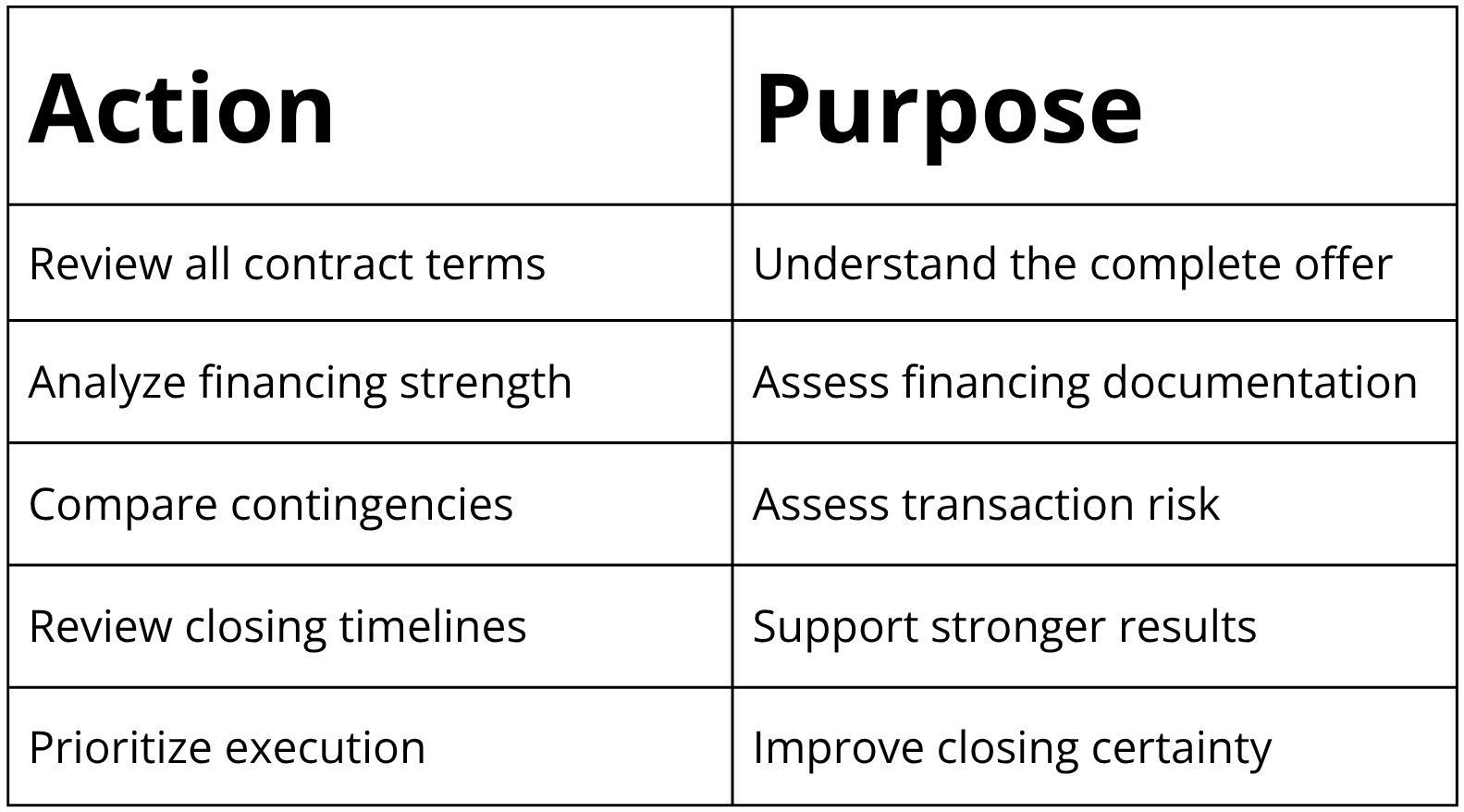
✅ What You Should Do Right Now
❓ FAQ
Q: Should sellers always choose the highest offer?
A: Not necessarily. Financing, contingencies, timelines, and contract strength can all influence the overall outcome.
Q: Why do contingencies matter so much?
A: Contingencies can affect certainty, timing, and the likelihood of a successful closing.
Q: Can the highest offer still be the right choice?
A: Yes. A higher-priced offer may align with a seller's goals when the financing, contingencies, closing schedule, and other contract terms are acceptable. No single factor determines which offer is most appropriate in every transaction.
🔚 Conclusion
Comparing purchase offers involves more than reviewing the proposed price. Financing information, contingencies, closing deadlines, and other contractual obligations can affect how an offer aligns with the seller's priorities. Reviewing the full terms with a real estate professional can help sellers evaluate the available options before deciding how to proceed.
This blog is for general informational purposes only and does not constitute legal, tax, accounting, investment, or professional advice. Always consult with qualified professionals before making any decisions based on this content. School information including addresses, phone numbers, and emails was accurate as of the blog’s published date but may change without notice. Please verify directly with the school or institution. This content is provided “as is,” without warranties of any kind. If you are currently under an exclusive agreement with another real estate broker, this blog is not intended as a solicitation.
Contact Us