
Should You Renovate the Kitchen or Bathroom Before Selling?
Updated November 18, 2026

Should You Renovate the Kitchen or Bathroom Before Selling?
Kitchens and bathrooms can influence how buyers evaluate a home's condition, functionality, and asking price. However, updating these spaces before selling does not always produce a financial return that justifies the expense. Understanding which repairs and improvements are appropriate can help sellers make informed decisions before investing in renovations.
📝 Introduction
Kitchens and bathrooms are important areas of a home because they contain features used regularly, including appliances, plumbing, storage, and ventilation. When preparing to sell, homeowners may wonder whether replacing cabinets, countertops, fixtures, or other finishes will improve buyer interest. Some improvements may support presentation and functionality, while more extensive remodeling can involve substantial expenses. Before starting work, sellers should consider existing conditions, local market expectations, renovation costs, and comparable property sales. Reviewing these factors can help determine whether repairs, selective updates, or larger improvements are appropriate.
🔑 5 Pro Moves to Evaluate Kitchen and Bathroom Improvements
1. Address Plumbing, Moisture, and Ventilation Concerns
Leaking faucets, damaged surfaces, poor ventilation, and signs of moisture may raise questions about maintenance and repair expenses. These conditions deserve attention before investing in cosmetic upgrades.
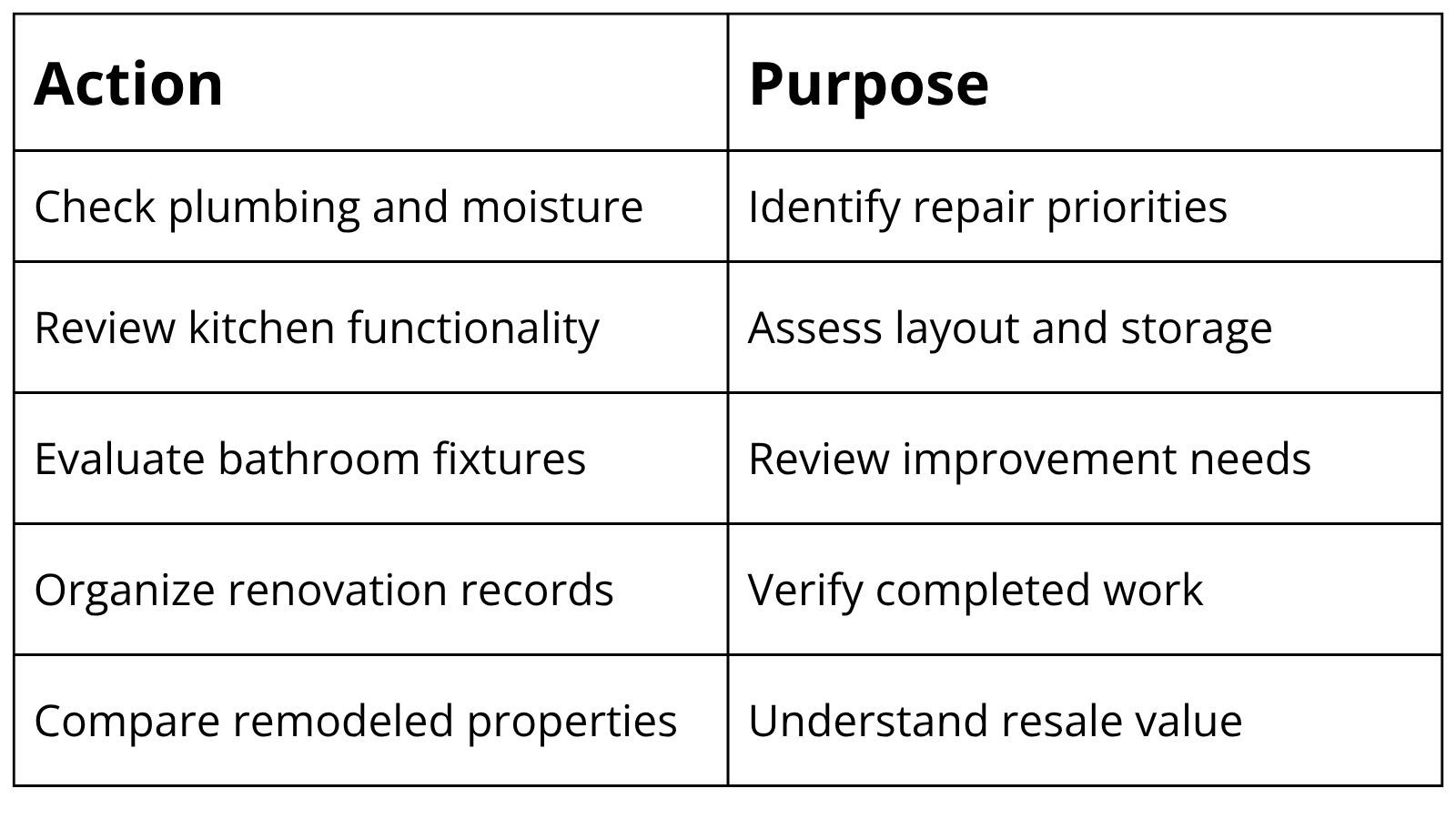
Now: Check visible plumbing fixtures, cabinets beneath sinks, grout, caulking, and ventilation systems. Obtain professional evaluations when needed and prioritize necessary repairs.
2. Evaluate Kitchen Layout and Storage
Kitchen functionality depends on available counter space, storage, appliances, lighting, and room configuration. Features such as quartz or granite countertops, soft-close drawers, and kitchen islands may appeal to some buyers, but not every improvement suits every property.
Now: Review cabinet condition, countertop surfaces, appliance operation, and available storage. Consider practical updates before changing the kitchen's layout or undertaking a complete renovation.
3. Consider Bathroom Updates Without Overbuilding
Bathrooms play a significant role in a home’s appeal. Features such as functional vanities, water-saving fixtures, accessible storage, effective ventilation, and appropriate lighting can contribute to usability. However, extensive upgrades may not be financially justified solely for resale.
Now: Evaluate existing showers, tubs, vanities, fixtures, and finishes. Compare the cost of minor improvements with larger remodeling projects before deciding which changes to make.
4. Review Renovation Costs, Permits, and Property Records
Kitchen and bathroom remodeling can involve plumbing, electrical work, cabinet installation, and changes to building systems. Certain projects require permits and appropriately licensed contractors. Existing records may also help clarify completed improvements when selling.
Now: Obtain project estimates, verify applicable permit requirements, and review contractor qualifications before starting work. Organize available permits, invoices, warranties, and improvement records for the sale.
5. Compare Renovated Homes Before Investing
Updated kitchens and bathrooms may influence market value, but the financial impact depends on property condition, location, comparable sales, and renovation expenses. An expensive remodel does not necessarily add an equivalent amount to the selling price.
Now: Review recent sales of properties with similar kitchen and bathroom conditions. Compare estimated project costs with local market evidence before undertaking major renovations solely to prepare the home for sale.
✅ What Can You Do Now?
❓ FAQ
Q: Should I completely remodel my kitchen before selling?
A: Not necessarily. A complete kitchen renovation may involve substantial expenses that are not fully recovered at resale. Depending on the property's existing condition, minor repairs, cabinet updates, improved lighting, or appliance servicing may be more practical. Review project estimates and comparable sales before deciding.
Q: Which bathroom improvements should sellers consider first?
A: Start by evaluating plumbing, ventilation, moisture concerns, and damaged fixtures or surfaces. After addressing necessary repairs, consider whether smaller cosmetic improvements would benefit the property's presentation. The appropriate scope depends on existing conditions and costs.
Q: Do kitchen and bathroom renovations need permits?
A: Permit requirements depend on the work performed and applicable local regulations. Projects involving plumbing, electrical systems, structural changes, or significant remodeling may require permits. Sellers should verify requirements with the local building department and provide applicable property disclosures when selling.
🔚 Conclusion
Kitchens and bathrooms influence how a home functions and how its condition is evaluated. Before investing in renovations, sellers should consider existing maintenance needs, functional improvements, project expenses, permits, and comparable property sales. Smaller updates may be appropriate for some homes, while others may benefit from more extensive work. Reviewing these factors with qualified professionals and a Realtor can help homeowners make informed decisions about preparing these spaces for sale.
This blog is for general informational purposes only and does not constitute legal, tax, accounting, investment, or professional advice. Always consult with qualified professionals before making any decisions based on this content. School information including addresses, phone numbers, and emails was accurate as of the blog’s published date but may change without notice. Please verify directly with the school or institution. This content is provided “as is,” without warranties of any kind. If you are currently under an exclusive agreement with another real estate broker, this blog is not intended as a solicitation.
Contact Us