
How to Position a Luxury Home in a Shifting Market
Updated November 17, 2026

How to Position a Luxury Home in a Shifting Market
Luxury real estate conditions can vary considerably by location, property characteristics, and price range. Sellers who understand their competition, present their homes accurately, and review buyer response can make informed decisions about pricing, marketing, and contract terms.
📝 Introduction
Selling a luxury property requires careful attention to the characteristics that distinguish it from competing listings. Market conditions are not identical across luxury price ranges, and changes in inventory or buyer activity may affect one property differently from another. Architecture, lot size, views, interior condition, amenities, and location can all influence how a home compares with recent sales. A successful listing strategy begins with understanding the specific property and the market in which it competes.
🔑 5 Pro Moves for Luxury Home Sellers
1. Refine Your Pricing Strategy
Pricing a luxury home requires more than comparing square footage or reviewing a neighborhood's average sale price. Property design, lot characteristics, improvements, views, and the availability of similar homes can affect the pricing analysis.
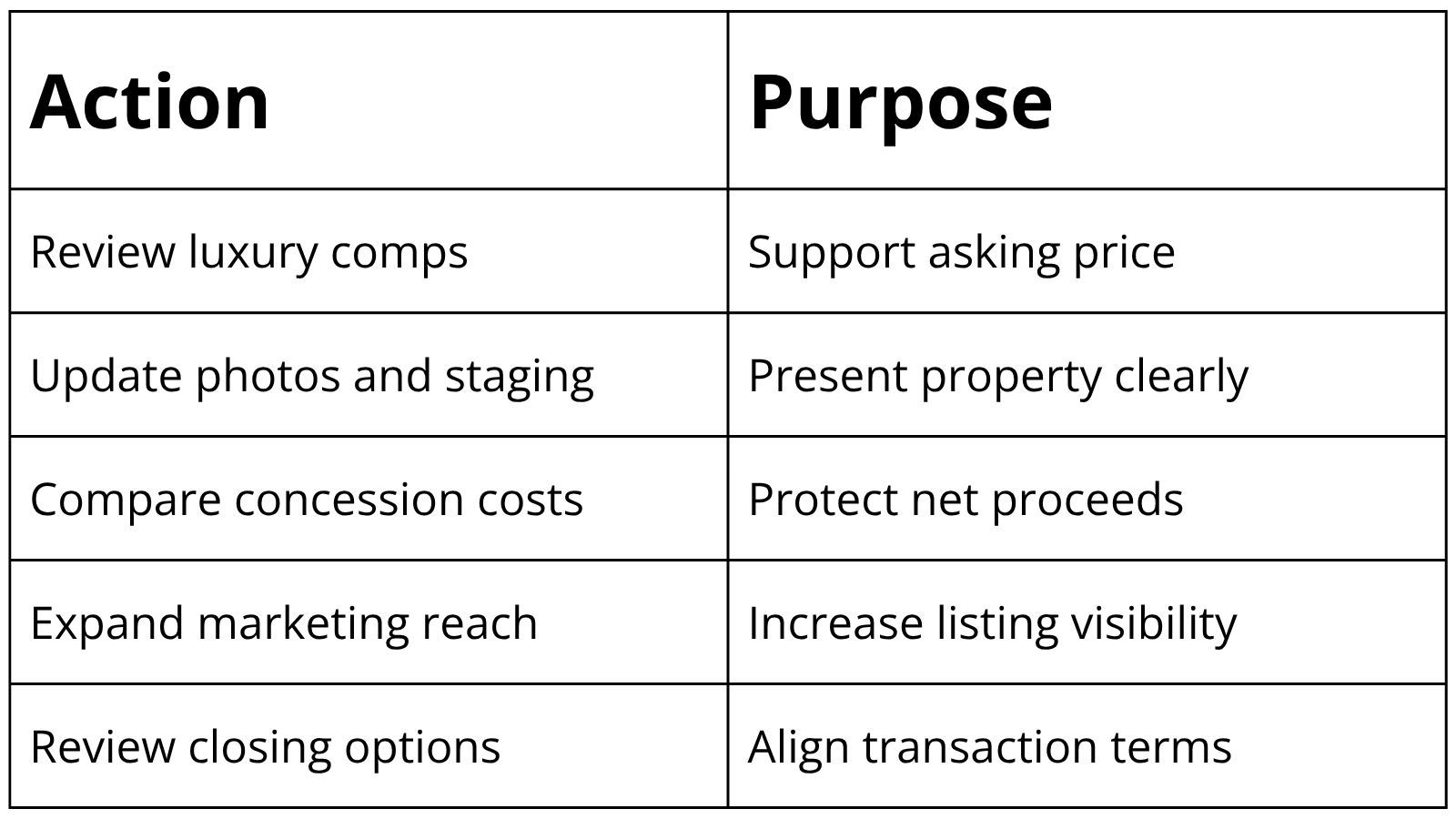
Now: Use recent comparable sales and competing listings within the relevant luxury price range. Review differences in property characteristics before establishing or adjusting your asking price.
2. Invest in Exceptional Presentation
Professional photography, thoughtful staging, accurate floor plans, and clear property descriptions can help buyers evaluate a luxury home's design and condition. The presentation should reflect what the property actually offers.
Now: Bring in premium staging, professional lighting, and high-end photography or video when appropriate for the property. Focus on important architectural details, interior spaces, outdoor areas, and documented upgrades.
3. Add Incentives That Matter
Seller concessions may help address specific buyer concerns, but they should be evaluated alongside the purchase price and estimated net proceeds. An incentive does not automatically provide more value than a price adjustment.
Now: Consider including certain appliances, agreed-upon repairs, or closing-cost assistance when appropriate. Review their cost, buyer financing restrictions, and contract terms before making an offer.
4. Expand Marketing Through Property-Based Exposure
Luxury properties may benefit from marketing across multiple geographic areas and real estate channels. The strategy should be based on the home's actual characteristics rather than assumptions about a buyer's background or identity.
Now: Highlight relevant property details such as architecture, views, lot size, interior improvements, and amenities. Use appropriate listing platforms, professional networks, digital advertising, and other lawful marketing channels to increase exposure.
5. Be Flexible with Terms and Timing
Closing schedules, possession arrangements, contingencies, and other contract terms can influence an offer's overall suitability. Flexibility may be useful when it supports the seller's priorities.
Now: Review acceptable closing dates, potential rent-back arrangements, contingencies, and estimated net proceeds before responding to offers. Evaluate each proposal based on its complete terms.
✅ What You Can Do Now
❓ FAQ
Q: Is it still easy to sell luxury homes right now?
A: That depends on the property and its market. Some luxury areas continue to experience substantial buyer interest, while others have more competition or longer marketing periods. Sellers should review local sales, active listings, and buyer activity before drawing conclusions about their property.
Q: Won’t incentives hurt my profit in the luxury market?
A: They can reduce net proceeds, depending on the type and amount of the concession. However, certain terms may be worth considering when they address a specific transaction concern. Sellers should compare the full financial impact before deciding whether an incentive is appropriate.
Q: How should a luxury home be marketed beyond the local area?
A: Marketing can include professional listing platforms, real estate networks, digital advertising, and other appropriate channels. The focus should remain on accurate property information and broad, nondiscriminatory exposure rather than restricting advertising to particular buyer groups.
🔚 Conclusion
Luxury home sales require a strategy that reflects the property, its competition, and current buyer response. Pricing should be supported by relevant comparable sales, while presentation and marketing should communicate the home's actual features clearly. Seller concessions and flexible terms may also deserve consideration when they support the overall transaction. By reviewing these factors together, luxury homeowners can make informed decisions about how to position their property for sale.
This blog is for general informational purposes only and does not constitute legal, tax, accounting, investment, or professional advice. Always consult with qualified professionals before making any decisions based on this content. School information including addresses, phone numbers, and emails was accurate as of the blog’s published date but may change without notice. Please verify directly with the school or institution. This content is provided “as is,” without warranties of any kind. If you are currently under an exclusive agreement with another real estate broker, this blog is not intended as a solicitation.
Contact Us