
Could a Low Appraisal Change Your Home Sale?
Updated November 17, 2026

Could a Low Appraisal Change Your Home Sale?
An appraisal gap occurs when a property's appraised value is lower than its agreed purchase price. For sellers, this difference can affect buyer financing, contract negotiations, and closing plans. Understanding the appraisal process before accepting an offer can help sellers evaluate potential risks and respond thoughtfully if a low valuation occurs.
📝 Introduction
A home can receive an acceptable purchase offer and still appraise below the agreed price. Because mortgage lenders use appraisals to assess the property's value, a lower valuation may affect the amount a buyer can borrow. Whether the transaction proceeds depends on the buyer's financing, available funds, and the terms of the purchase agreement. Sellers can prepare by reviewing relevant comparable sales, organizing property records, and understanding appraisal and financing contingencies before entering escrow.
🔑 5 Pro Moves to Mitigate Appraisal Gap Risk
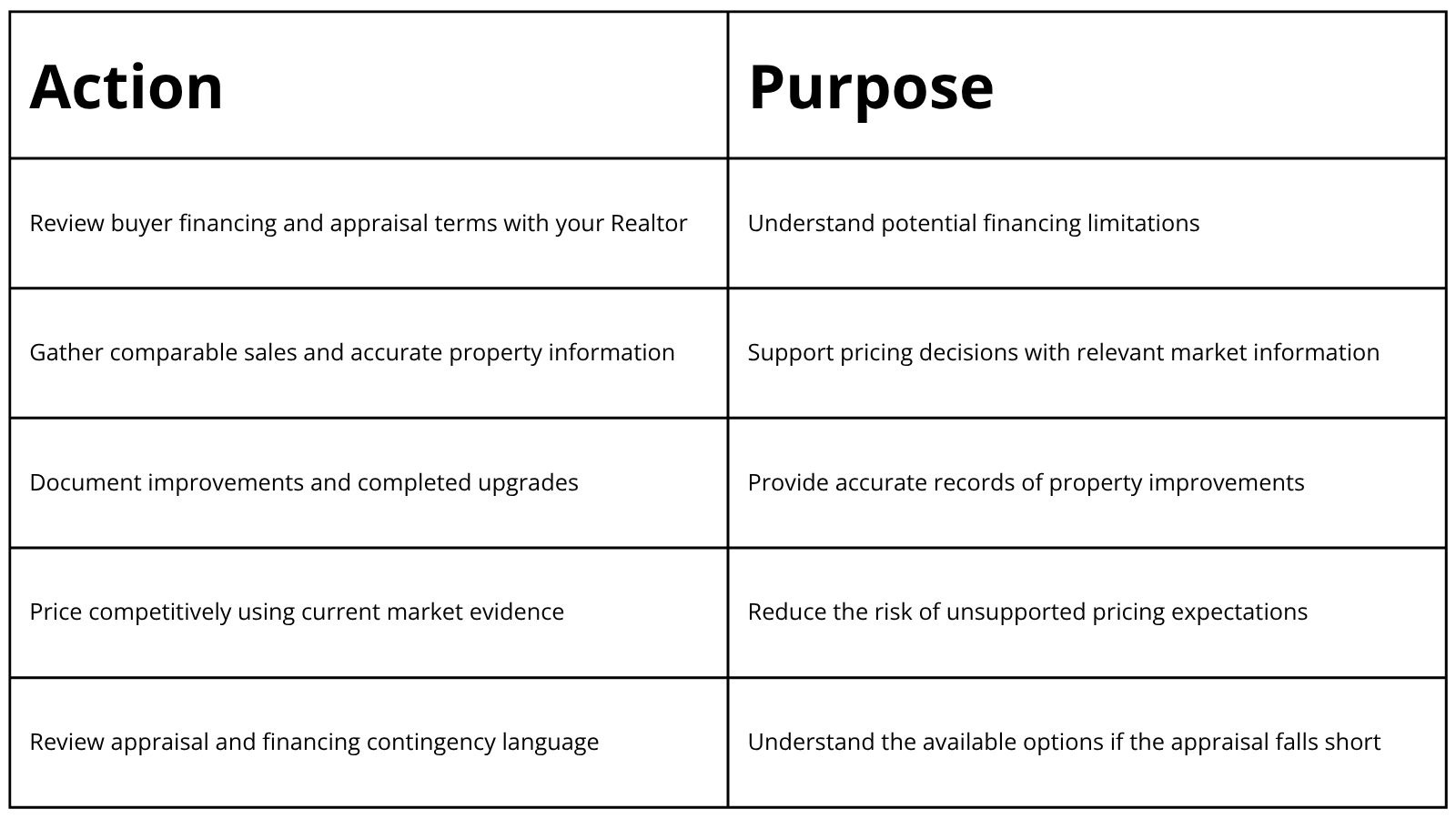
1. Review Buyer Financing and Appraisal Terms Early
An offer's purchase price is only one part of its financial structure. The buyer's financing, available funds, and appraisal contingency terms can affect how the transaction proceeds if the valuation is lower than expected.
Now: Ask your Realtor to review the buyer's financing documentation, appraisal contingency, and any written commitment to contribute additional funds if an appraisal gap occurs.
2. Prepare Relevant Comparable Sales Before Listing
Recent closed sales involving similar properties provide useful pricing context. Pending sales and active listings may offer additional information about current competition, although they do not establish closed-sale values.
Now: Work with your Realtor to identify relevant comparable sales based on property size, condition, location, lot characteristics, and improvements. Make accurate supporting information available to the appraiser through appropriate communication channels.
3. Document Home Upgrades Thoroughly
Property improvements may not be fully apparent without supporting information. Accurate records can help an appraiser understand the home's condition and completed work, although improvement costs do not necessarily translate into equal increases in appraised value.
Now: Provide invoices, before-and-after photos, applicable permits, completion dates, warranties, and factual descriptions of improvements to the kitchen, bathrooms, major systems, or other areas of the property.
4. Avoid Pricing Too Aggressively Above Market
The wider the gap between your asking price and market comps, the higher the appraisal risk.
Now: Review recent comparable sales, current competition, and property condition before establishing a listing price. Recognize that a strong offer above asking price may still require appraisal support when the buyer uses mortgage financing.
5. Understand Appraisal and Financing Contingencies Before Accepting an Offer
Contract terms determine what rights and obligations apply if the appraisal is lower than the agreed purchase price. Renegotiation, additional buyer funds, and possible cancellation depend on the written agreement and the buyer's financing circumstances.
Now: Review the appraisal contingency, financing contingency, deadlines, and any negotiated appraisal-gap provisions with your Realtor. Seek legal guidance when contract language requires clarification.
✅ What You Can Do Now
❓ FAQ
Q: Should I refuse offers above list price if the buyer can’t cover appraisal differences?
A: Not automatically. An offer above asking price may still be worth considering, but sellers should carefully evaluate financing, appraisal contingencies, and the buyer's ability to complete the transaction. A high purchase price alone does not establish that the financing will support the agreement.
Q: Do appraisal gaps happen often now?
A: Appraisal gaps can occur, but their frequency varies by location, property type, price range, and market conditions. There is no reason to assume they are increasing in every market. Sellers should evaluate appraisal exposure based on the specific property and the terms of the offer.
Q: What happens if the appraisal comes in below the agreed purchase price?
A: The buyer and seller may consider renegotiating the price, the buyer may be able to contribute additional funds subject to lender approval, or the buyer may request a reconsideration of value through the lender if the appraisal contains supported concerns. If the parties cannot reach an agreement, their options depend on the purchase contract and applicable contingencies.
🔚 Conclusion
A low appraisal does not automatically mean a home sale will fail. However, it can create financial and contractual decisions that sellers should understand before accepting an offer. Accurate comparable sales, documented improvements, thoughtful pricing, and a clear review of appraisal and financing contingencies can help sellers prepare. If a valuation comes in below the agreed price, reviewing the available information and contractual options provides a practical basis for deciding what to do next.
This blog is for general informational purposes only and does not constitute legal, tax, accounting, investment, or professional advice. Always consult with qualified professionals before making any decisions based on this content. School information including addresses, phone numbers, and emails was accurate as of the blog’s published date but may change without notice. Please verify directly with the school or institution. This content is provided “as is,” without warranties of any kind. If you are currently under an exclusive agreement with another real estate broker, this blog is not intended as a solicitation.
Contact Us