
Confusion Slows Decisions
Updated November 17, 2026

Confusion Slows Decisions
A clearly presented layout can help buyers understand how rooms connect and how the available space is used. Furniture placement, defined room functions, and unobstructed pathways make a home's layout easier to evaluate.
📝 Introduction
The way a home is experienced matters from the moment it is seen. Buyers may find it harder to evaluate a property when furniture blocks pathways or the purpose of certain spaces is unclear. Even a well-maintained home can be difficult to assess when its layout is not presented clearly. Thoughtful furniture placement and an organized presentation can help buyers understand room dimensions, movement between spaces, and potential uses of the existing floor plan.
🔑 5 Pro Moves to Improve Layout Clarity
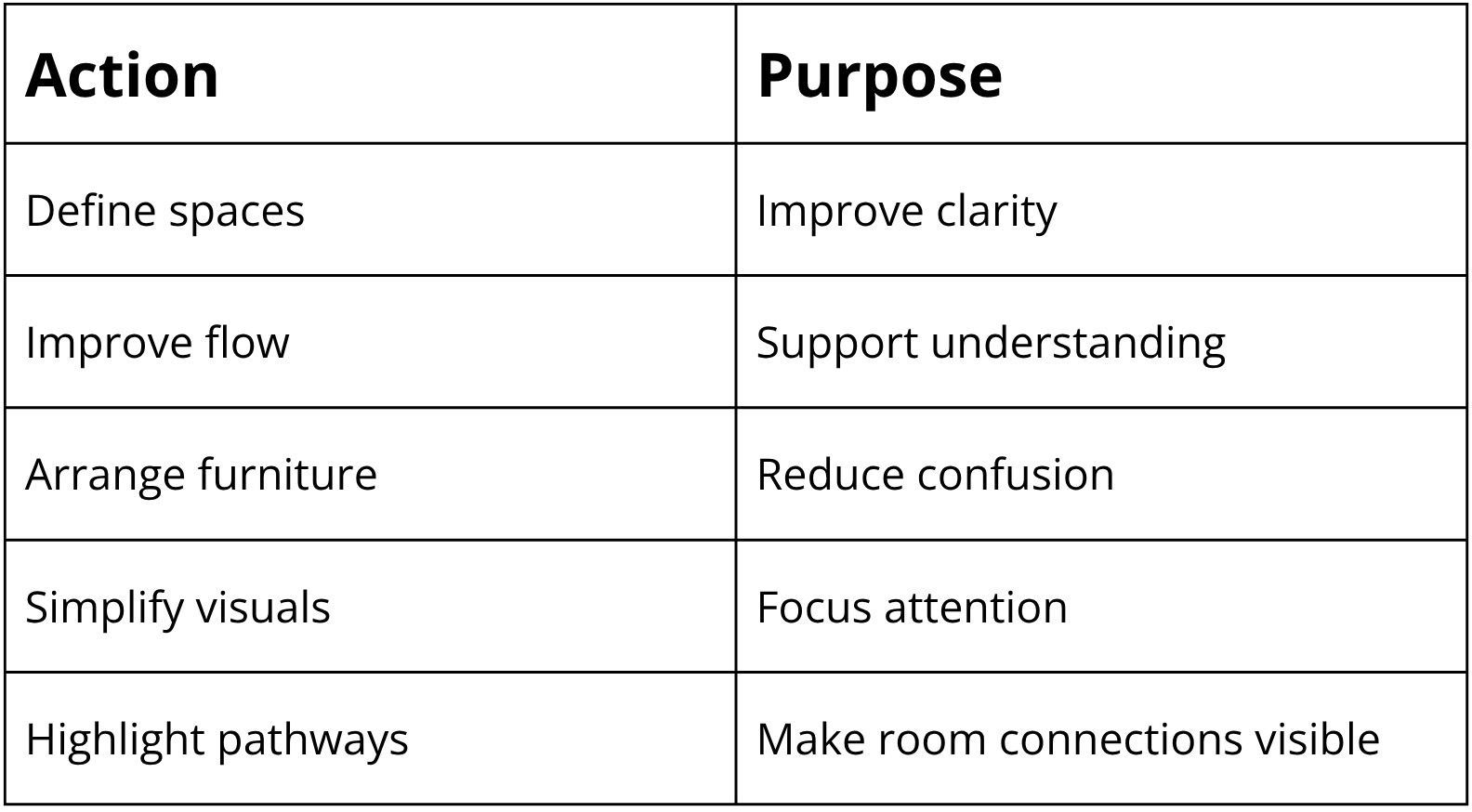
1. Define Each Space Clearly
When room functions are unclear, buyers may have questions about how the available space can be used.
Now: Arrange each area with a clear purpose.
2. Improve Flow Between Rooms
Smooth transitions support understanding.
Now: Remove obstacles that disrupt movement.
3. Arrange Furniture to Match Room Use
Furniture placement can make a room's dimensions, function, and access easier or harder to assess.
Now: Position furniture to avoid overcrowding doorways, windows, and walking paths while keeping the room's intended function clear.
4. Reduce Visual Distractions
Too many elements divide attention.
Now: Simplify furniture and decor.
5. Highlight Natural Pathways
Unobstructed walkways make it easier to move between rooms and view the property's layout.
Now: Keep entrances, hallways, and transitions between rooms clear during photography and scheduled showings.
✅ What You Should Do Right Now
❓ FAQ
Q: Does layout clarity really matter?
A: Buyers often use listing photos and in-person showings to understand how rooms connect and how the available space can be used. Clear presentation can make those features easier to evaluate, although its influence varies by property.
Q: Can confusion affect how a home performs?
A: A crowded or unclear layout may make it harder for buyers to evaluate a property's use of space. However, layout presentation is only one of several factors that may influence buyer interest.
Q: Do sellers need to change their floor plan before listing?
A: Not necessarily. Many presentation improvements involve rearranging furniture, removing unnecessary items, and clarifying room functions without construction. Whether physical alterations are worthwhile depends on the property, projected costs, and local market conditions.
🔚 Conclusion
A home's layout is an important consideration when buyers evaluate how its spaces connect and function. Clear room definitions, practical furniture arrangements, and unobstructed pathways can make the existing floor plan easier to understand during online viewing and in-person showings. Sellers do not necessarily need major changes to improve layout presentation. Reviewing furniture placement, removing unnecessary visual distractions, and maintaining accessible walking areas can help present the property's available space accurately. These practical steps allow buyers to evaluate the home's layout alongside its other features and overall condition.
This blog is for general informational purposes only and does not constitute legal, tax, accounting, investment, or professional advice. Always consult with qualified professionals before making any decisions based on this content. School information including addresses, phone numbers, and emails was accurate as of the blog’s published date but may change without notice. Please verify directly with the school or institution. This content is provided “as is,” without warranties of any kind. If you are currently under an exclusive agreement with another real estate broker, this blog is not intended as a solicitation.
Contact Us