
Can Small Issues Put a Home Sale at Risk?
Updated November 17, 2026

Can Small Issues Put a Home Sale at Risk?
After an offer is accepted, inspection findings, repair requests, missing documents, and contract deadlines can create additional questions during a real estate transaction. Sellers who respond promptly and evaluate these matters carefully can be better prepared for decisions that arise before closing.
Small issues deserve attention during escrow.
📝 Introduction
An accepted offer begins a new stage of the home selling process that may involve inspections, document reviews, lender requirements, and contractual deadlines. Some concerns can be addressed by providing additional information, while others may require repair estimates, further investigation, or negotiations between the parties. Not every issue leads to a dispute or cancellation, and the appropriate response depends on the purchase agreement and the property's circumstances. Sellers who stay informed, review requests carefully, and communicate with their real estate professional can better manage questions as they arise throughout escrow.
🔑 5 Ways Sellers Can Address Small Issues During Escrow
1. Address Minor Repairs Before Listing
Visible maintenance concerns may lead to additional questions during property inspections.
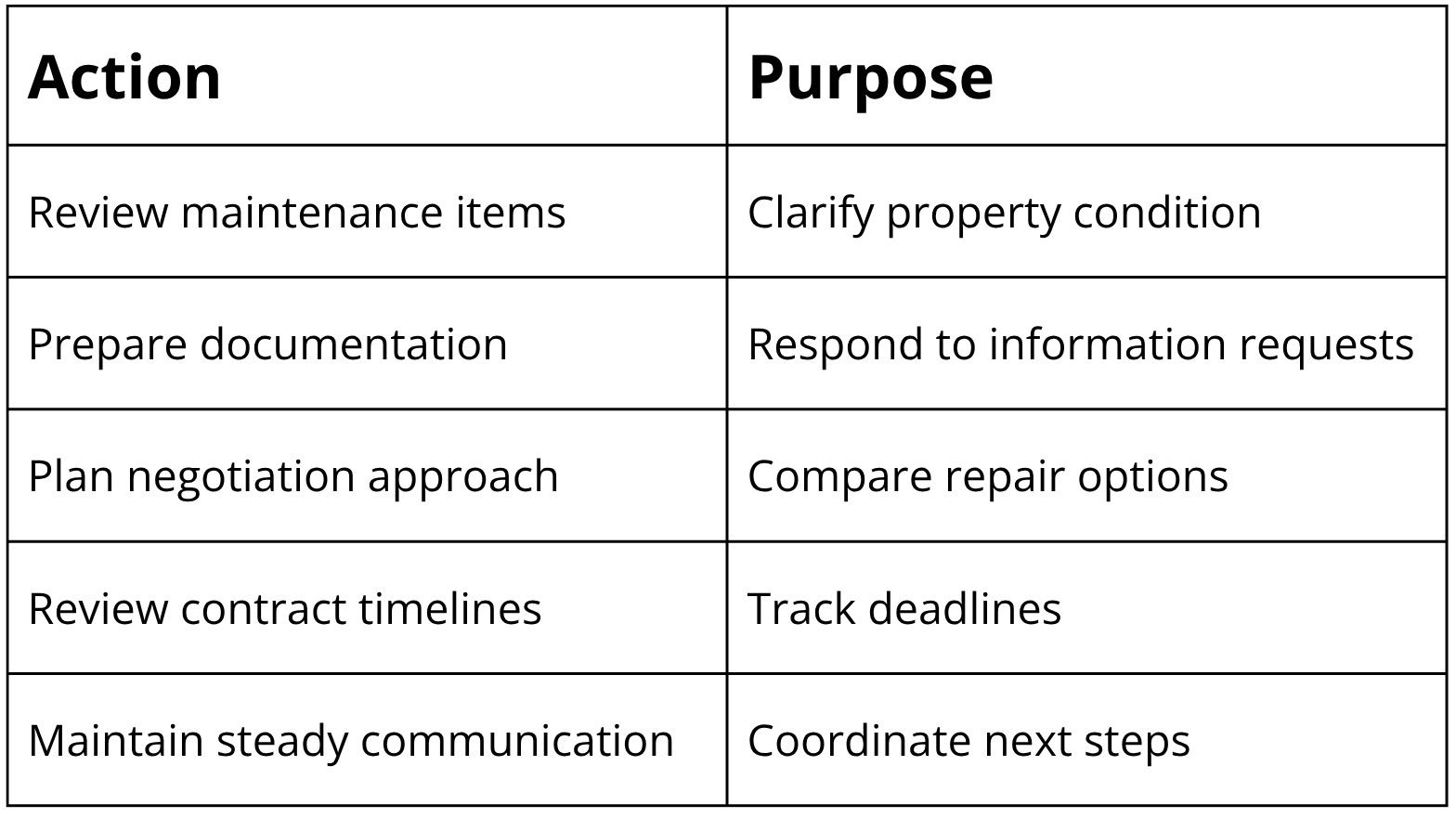
Now: Review loose fixtures, plumbing concerns, cosmetic damage, and other maintenance items before listing. Arrange appropriate repairs when practical and consult qualified professionals for issues requiring further evaluation.
2. Keep Communication Professional
Clear, professional communication can help reduce misunderstandings about repair requests, documents, and transaction timelines.
Now: Discuss responses with your real estate professional and keep communication focused on factual information, the purchase agreement, and available options.
3. Respond Promptly to Requests
Unanswered requests can complicate coordination among buyers, sellers, lenders, inspectors, and escrow professionals.
Now: Track outstanding documents, requested information, and response dates while maintaining communication with the professionals involved.
4. Separate Emotional Reaction From Strategy
Repair requests, proposed credits, and inspection concerns may require additional information before a seller can evaluate the available options.
Now: Review inspection findings, obtain estimates when appropriate, and consider the scope and cost of each issue before responding.
5. Focus on the End Goal
Seller priorities, purchase agreement terms, and transaction deadlines should guide decisions throughout escrow.
Now: Discuss pricing, repair requests, timing, and potential tradeoffs with your real estate professional. Seek qualified legal advice when contractual disputes or legal questions arise.
✅ What You Should Do Right Now
❓ FAQ
Q: Can a minor issue lead to problems during escrow?
A: It can. A repair concern, missing document, or unanswered question may require clarification or negotiation. However, not every issue causes a delay or cancellation. The outcome depends on the circumstances, contract terms, and how the parties address the concern.
Q: Should sellers agree to every small repair request?
A: Not necessarily. Sellers can evaluate each request based on inspection findings, the scope and cost of the work, purchase agreement terms, and negotiations. A real estate professional can help review the available options, while qualified specialists or legal advisers may be appropriate for particular concerns.
Q: What should sellers do when documents or repair requests are delayed?
A: Identify what remains outstanding, review applicable transaction deadlines, and communicate with the appropriate professionals. Providing available information promptly and obtaining additional guidance when needed can help the parties determine the next steps.
🔚 Conclusion
The escrow process involves important decisions, document reviews, and contractual deadlines. Even relatively minor questions can require additional information or discussion before a transaction moves forward. Sellers can prepare by reviewing maintenance concerns, organizing available property records, responding to requests, and evaluating proposed solutions in the context of the purchase agreement. While preparation and communication cannot prevent every delay or cancellation, they can help sellers address issues thoughtfully and make informed decisions throughout the closing process.
This blog is for general informational purposes only and does not constitute legal, tax, accounting, investment, or professional advice. Always consult with qualified professionals before making any decisions based on this content. School information including addresses, phone numbers, and emails was accurate as of the blog’s published date but may change without notice. Please verify directly with the school or institution. This content is provided “as is,” without warranties of any kind. If you are currently under an exclusive agreement with another real estate broker, this blog is not intended as a solicitation.
Contact Us