
Can Move-In-Ready Condition Affect Your Home's Sale Price?
Updated November 18, 2026

Can Move-In-Ready Condition Affect Your Home's Sale Price?
A home's condition can influence how buyers evaluate its asking price, repair requirements, and overall appeal. Properties with completed improvements may attract interest from buyers seeking fewer immediate repairs, but renovation costs do not always translate into equivalent increases in selling price.
📝 Introduction
Property condition is an important consideration when preparing a home for sale. Some buyers prefer properties that require limited immediate work, while others are willing to consider repairs or renovations when the price reflects the condition. For sellers, this creates an important decision about which improvements to complete before listing. Kitchens, bathrooms, roofing, heating and cooling systems, and general maintenance can influence buyer evaluations, but not every project provides the same financial return. Reviewing property condition, estimated repair costs, and comparable sales can help sellers decide which improvements are worthwhile.
🔑 5 Pro Moves to Prepare a Move-In-Ready Home for Sale
1. Identify Repairs Before Investing in Upgrades
Visible maintenance concerns and aging building systems may influence buyer evaluations. However, replacing a functional roof, HVAC system, or kitchen solely to prepare for sale may not be financially justified.
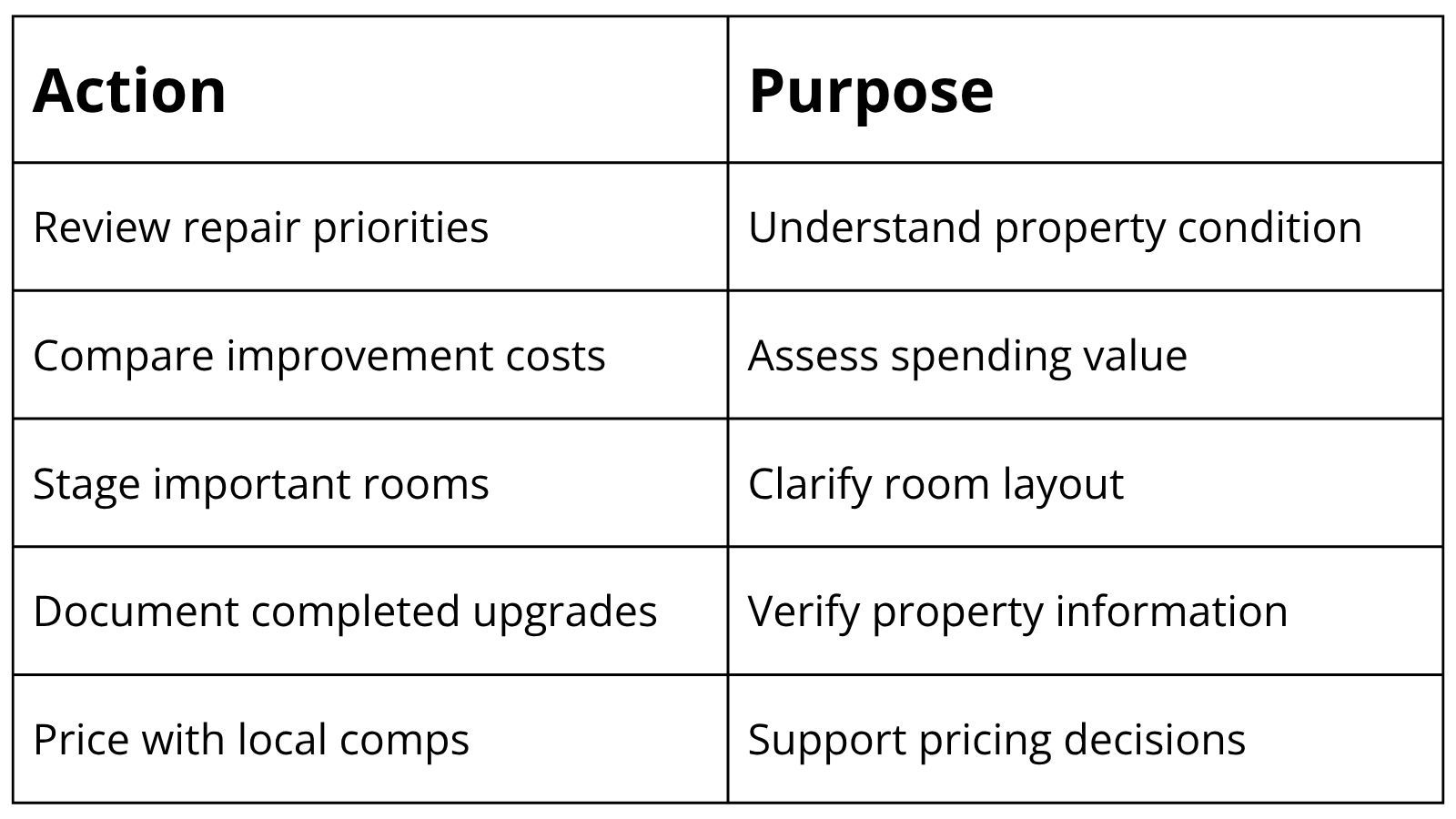
Now: Review the condition of major systems, address necessary repairs, and obtain estimates before committing to expensive replacements.
2. Choose Improvements Based on Cost and Market Relevance
Some smaller improvements can improve presentation without requiring a major renovation. The potential financial benefit depends on the property's existing condition and local market expectations.
Now: Consider paint, lighting, minor kitchen updates, and other practical improvements. Compare estimated costs with the likely market benefit before proceeding.
3. Stage Around Renovations
Staging can help buyers understand completed improvements, room dimensions, and the property's overall layout.
Now: Showcase kitchen and bathroom updates with clean surfaces, appropriate furniture placement, and professional photography. Give particular attention to the living room, primary bedroom, and other important spaces.
4. Market Completed Upgrades Accurately
Documented improvements can provide useful information about the property's condition and maintenance history. Descriptions such as ""move-in ready"" should accurately reflect the home rather than imply that no repairs or maintenance will ever be necessary.
Now: Highlight completed work using factual descriptions, available permits, invoices, and warranties. Identify relevant upgrades without overstating their effect on market value.
5. Price to Reflect Your Work
While major renovations may influence a property's market value, the cost of improvements alone does not determine its appropriate asking price.
Now: Align asking price with your level of modernization. Review comparable sales involving properties with similar conditions, improvements, and features before establishing the listing price.
✅ What You Can Do Now
❓ FAQ
Q: Are small upgrades worth it in this market?
A: They can be, depending on the property's condition and the cost of the improvements. Fresh paint, lighting updates, minor repairs, and selected kitchen improvements may help with presentation. Sellers should compare the expected expense with local market conditions rather than assume every improvement will increase the selling price.
Q: Will staging really make a difference?
A: Staging can help buyers understand a home's layout and how its rooms may be used. However, its effect on showing activity, selling price, and time on market varies. A staging consultation or selective furniture arrangement may be sufficient for some properties.
Q: Should sellers replace an older roof or HVAC system before listing?
A: Not automatically. The decision should consider the equipment's condition, inspection findings, remaining service life, replacement cost, and local market expectations. Sellers may choose to complete necessary repairs, replace certain systems, or disclose existing conditions and price the property accordingly.
🔚 Conclusion
Move-in-ready condition can influence buyer interest, but preparing a property for sale does not always require extensive renovations. Addressing maintenance concerns, selecting practical improvements, presenting rooms clearly, and documenting completed work can help buyers evaluate a home's condition. Sellers should also consider renovation expenses and comparable sales when determining their asking price. A thoughtful preparation strategy focuses on the property's actual needs and the financial impact of each decision.
This blog is for general informational purposes only and does not constitute legal, tax, accounting, investment, or professional advice. Always consult with qualified professionals before making any decisions based on this content. School information—including addresses, phone numbers, and emails—was accurate as of the blog’s published date but may change without notice. Please verify directly with the school or institution. This content is provided “as is,” without warranties of any kind. If you are currently under an exclusive agreement with another real estate broker, this blog is not intended as a solicitation.
Contact Us