

Before You Pull Your Listing, What Should You Review?
Updated November 17, 2026

Before You Pull Your Listing, What Should You Review?
When a home receives limited buyer interest, removing it from the market is one possible choice, but it is not always necessary. Reviewing pricing, property presentation, showing activity, and buyer feedback can help sellers determine whether to adjust their strategy or reconsider their selling timeline.
📝 Introduction
A home that remains on the market longer than expected can raise questions about pricing, presentation, and buyer demand. However, limited activity does not automatically mean a listing should be withdrawn. Some properties may benefit from a price adjustment or improvements to marketing, while other sellers may prefer to pause their plans. Before making that decision, sellers should review how their property compares with current competition and identify what the market response is communicating.
🔑 5 Pro Moves Before Deciding to Delist
1. Identify Where Buyer Interest Is Slowing
Online views, showing requests, completed tours, and offers provide different information. A listing receiving online attention but few showings may require a different response than one attracting tours without offers.
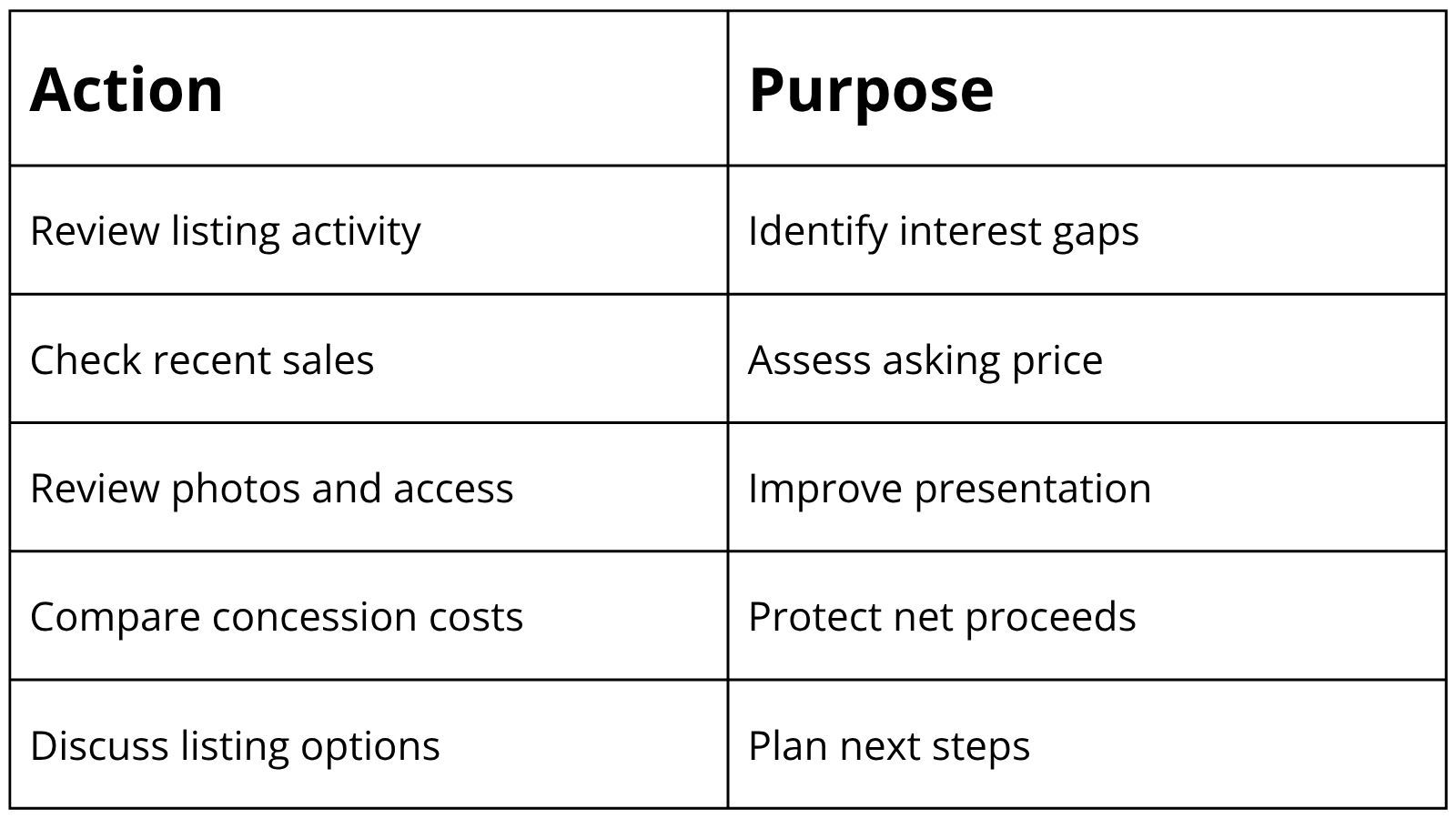
Now: Review listing engagement with your Realtor and identify whether the main concern is visibility, showing activity, or buyer response after visiting the property.
2. Compare Your Price With Current Competition
Listings priced above buyer expectations are more likely to experience limited interest, particularly when buyers can compare similar properties.
Now: Use recent comparable sales and current competing listings to evaluate your asking price. Consider differences in property condition, size, improvements, and location before deciding whether an adjustment is appropriate.
3. Review Presentation and Showing Accessibility
First impressions draw or repel buyers. Property condition, photographs, staging, and showing availability can influence whether buyers decide to visit.
Now: Examine the listing photographs, room presentation, visible maintenance concerns, and showing arrangements. Address specific issues supported by feedback instead of making broad improvements without a clear reason.
4. Consider Buyer Terms Before Offering Incentives
Seller concessions may be useful in certain transactions, but they involve costs and may be subject to the buyer's financing requirements. Limited-time offers do not automatically create meaningful buyer interest.
Now: Discuss possible closing-cost credits, repair arrangements, or closing-date flexibility with your Realtor. Compare the estimated net proceeds and applicable lender restrictions before offering concessions.
5. Decide Whether to Continue, Pause, or Relaunch
A relaunch may be appropriate when meaningful changes have been made to pricing, presentation, or marketing. However, withdrawing and relisting does not guarantee a fresh response or reset the property's marketing history.
Now: Review current market conditions, your selling priorities, and applicable MLS rules before deciding whether to keep the listing active, temporarily pause marketing, or prepare a revised launch plan.
✅ What You Can Do Now
❓ FAQ
Q: What is “delisting”?
A: Delisting generally refers to removing a property from the market without completing a sale. A listing may be withdrawn temporarily, canceled, or allowed to expire, depending on the seller's circumstances, listing agreement, and applicable MLS procedures.
Q: Is delisting a bad sign?
A: Not necessarily. A seller may withdraw a property because of changing plans, market conditions, pricing expectations, or preparation needs. While limited buyer interest can contribute to the decision, delisting alone does not establish that something is wrong with the home.
Q: Will relisting automatically reset the days on market?
A: No. Days-on-market calculations and relisting requirements vary by MLS. Some listing histories and previous marketing information may remain available even after a property is withdrawn and reintroduced. Sellers should review the applicable rules with their Realtor before making a relisting decision.
🔚 Conclusion
A listing that receives limited attention deserves careful evaluation before it is removed from the market. Pricing, property presentation, buyer feedback, showing accessibility, and available transaction terms may reveal opportunities for improvement. For some sellers, continuing with a revised strategy will make sense. Others may decide that a temporary pause better supports their circumstances. The important decision is not simply whether to delist, but whether the next step is supported by current market information and the seller's goals.
This blog is for general informational purposes only and does not constitute legal, tax, accounting, investment, or professional advice. Always consult with qualified professionals before making any decisions based on this content. School information including addresses, phone numbers, and emails was accurate as of the blog’s published date but may change without notice. Please verify directly with the school or institution. This content is provided “as is,” without warranties of any kind. If you are currently under an exclusive agreement with another real estate broker, this blog is not intended as a solicitation.
Contact Us