

Every Seller Has Expectations. The Market Has the Answers.
Published July 29, 2026

Every Seller Has Expectations. The Market Has the Answers.
Every seller begins the selling process with expectations about pricing, timing, buyer interest, and the overall experience. Once a home enters the market, current market information begins to provide valuable insight. Showing activity, buyer feedback, comparable sales, and local market conditions can help sellers evaluate whether their expectations remain aligned with current market conditions.
The market does not replace expectations. It helps refine them.
📝 Introduction
Every home sale begins with a plan, and every seller has expectations about how the process may unfold. Those expectations are often influenced by recent sales, conversations with friends, neighborhood activity, or broader real estate headlines. Once a home is listed, however, current market information begins to emerge through buyer activity, comparable sales, market trends, and feedback. Sellers who compare their expectations with this information are often better equipped to evaluate opportunities, make informed decisions, and keep their selling strategy aligned with current market conditions rather than relying solely on assumptions made before listing.
🔑 5 Ways the Market Helps Shape Seller Expectations
1. Buyer Activity Provides Early Feedback
Showing activity and buyer inquiries can help indicate how the market is responding to your listing.
Now: Review showing activity with your real estate professional and evaluate trends over time rather than focusing on a single day or weekend.
2. New Comparable Sales Provide Fresh Information
The market continues to evolve after your home is listed.
Now: Review newly pending and recently closed comparable homes to better understand how current market activity may influence your selling strategy.
3. Buyer Feedback Adds Valuable Context
Repeated questions or comments may identify patterns worth discussing.
Now: Review recurring feedback with your real estate professional and determine whether any meaningful trends are emerging.
4. Local Market Conditions Influence Every Sale
Inventory levels, mortgage market conditions, and seasonal activity can affect buyer behavior.
Now: Stay informed about meaningful changes in your local market and discuss how they may influence your selling strategy.
5. Flexibility Supports Better Decisions
Expectations are a starting point, but current market information helps guide future decisions.
Now: Evaluate new information as it becomes available and discuss your options with your real estate professional before making significant changes.
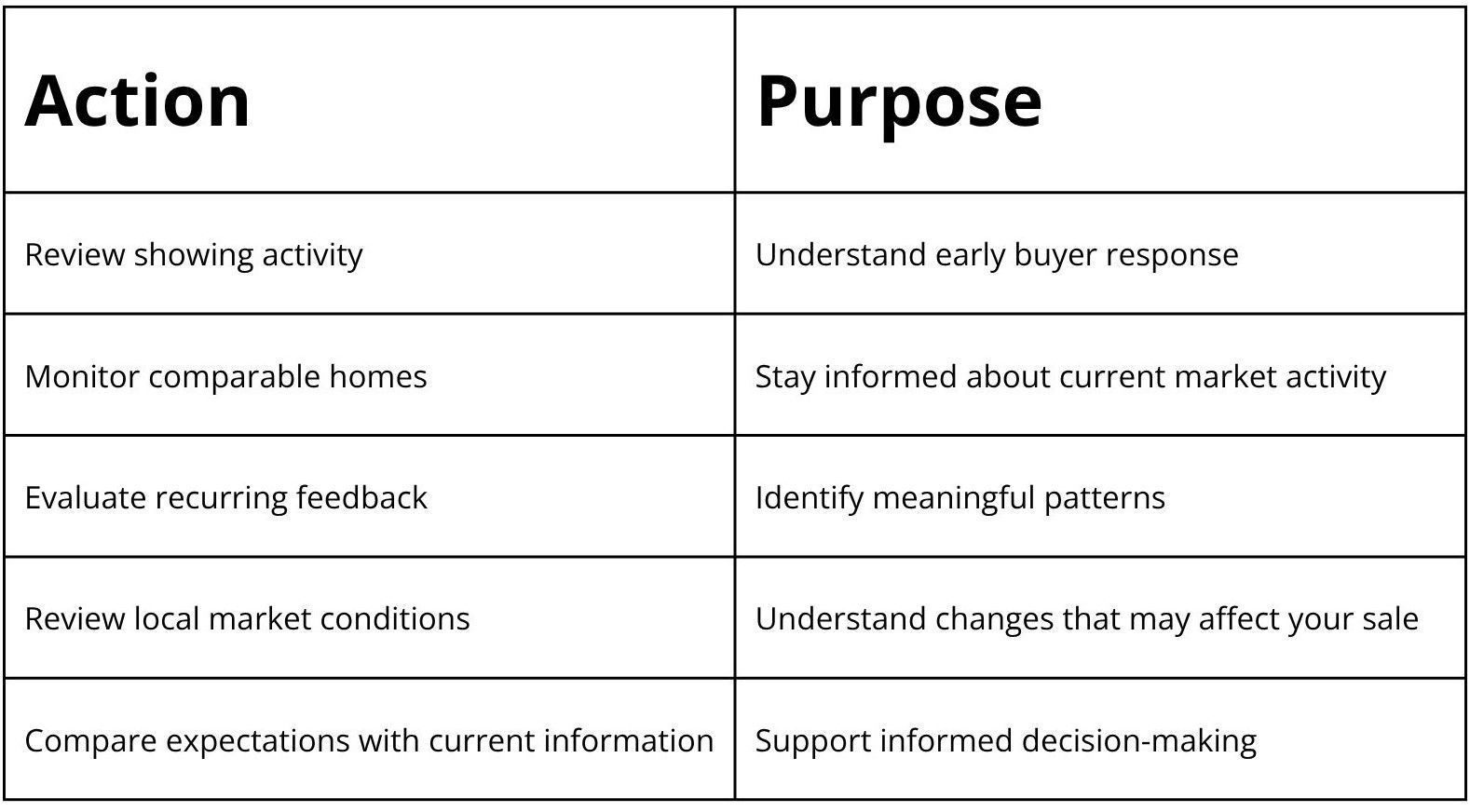
✅ What You Should Do Right Now
❓ FAQ
Q: Is it normal for expectations to change after a home is listed?
A: Yes. The market can provide new information throughout the selling process. Reviewing that information helps sellers evaluate whether their original expectations continue to align with current market conditions.
Q: Should sellers change their strategy as soon as new information becomes available?
A: Not necessarily. Individual events rarely tell the complete story. Reviewing trends over time with your real estate professional provides better context for making informed decisions.
Q: Why is local market activity more important than national headlines?
A: National trends provide broad context, but buyers make decisions based on the homes available in their local market. Reviewing local activity helps sellers better understand the environment in which their property is competing.
🔚 Conclusion
Expectations play an important role in every home sale, but they are only the starting point. As buyer activity, comparable sales, feedback, and local market conditions continue to develop, sellers gain a clearer understanding of how the market is responding to their property. Comparing expectations with current market information helps sellers make thoughtful decisions throughout the selling process. Effective selling strategies are often built by combining preparation with the information that becomes available throughout the selling process.
This blog is for general informational purposes only and does not constitute legal, tax, accounting, investment, or professional advice. Always consult with qualified professionals before making any decisions based on this content. School information including addresses, phone numbers, and emails was accurate as of the blog’s published date but may change without notice. Please verify directly with the school or institution. This content is provided “as is,” without warranties of any kind. If you are currently under an exclusive agreement with another real estate broker, this blog is not intended as a solicitation.
Contact Us