
Contingency Compression
Updated November 17, 2026

Contingency Compression
Some buyers propose shorter contingency periods when submitting offers on a home. These terms can affect the time available for property inspections, appraisal reviews, financing, and other contractual conditions. Sellers who prepare available property information and carefully evaluate proposed deadlines can better understand the responsibilities and considerations associated with accepting an offer.
📝 Introduction
Contingency periods are an important part of many real estate purchase agreements. They establish timeframes for buyers to complete specified investigations, financing arrangements, appraisal reviews, or other conditions included in the contract. Although some offers contain shorter contingency periods, the appropriate timeline depends on the property, financing, buyer circumstances, and negotiated terms. A shorter period does not automatically indicate a stronger offer or guarantee that the transaction will close sooner. For sellers, reviewing available disclosures, preparing property information, and evaluating proposed contract deadlines can provide a clearer understanding of each offer. Working with a real estate professional to assess the complete agreement can help sellers make informed decisions without relying on speed alone.
🔑 5 Ways Sellers Can Evaluate Short Contingency Periods
1. Prepare the Home Before Listing
Shorter contingency periods can leave less time for buyers to complete inspections and evaluate property conditions after an offer is accepted.
Now: Review visible maintenance concerns and determine which repairs, if any, should be completed before listing. Prepare the property for reasonable inspection access and maintain accurate information about known conditions.
2. Have Disclosures and Reports Ready Early
Organized property records and applicable seller disclosures can provide important information for buyers reviewing a home. However, seller-provided documents do not replace a buyer's independent investigations.
Now: Gather available permits, warranties, previous inspection reports, improvement records, and required disclosures. Discuss with your real estate professional whether additional pre-listing inspections would be appropriate.
3. Review Offer Timelines Carefully
Inspection scheduling, appraisal availability, lender requirements, and other transaction steps may affect whether proposed contingency deadlines are practical.
Now: Review the inspection, appraisal, and financing periods in each offer. Discuss whether the proposed schedule is realistic based on the information available and the transaction's requirements.
4. Favor Clarity Over Speed Alone
A shorter contingency period does not automatically make an offer more reliable. Financing terms, contractual obligations, property investigations, and closing arrangements also deserve consideration.
Now: Evaluate the complete offer, including contingency provisions, financing details, deposit terms, closing dates, and procedures for addressing contractual deadlines.
5. Plan for Contract Deadlines and Follow-Up
Once an offer is accepted, timely communication and accurate tracking of contractual milestones can help sellers stay informed as the transaction progresses.
Now: Review the agreed deadlines with your real estate professional and escrow officer. Coordinate property access, respond to requests appropriately, and address any proposed extensions or changes according to the signed agreement.
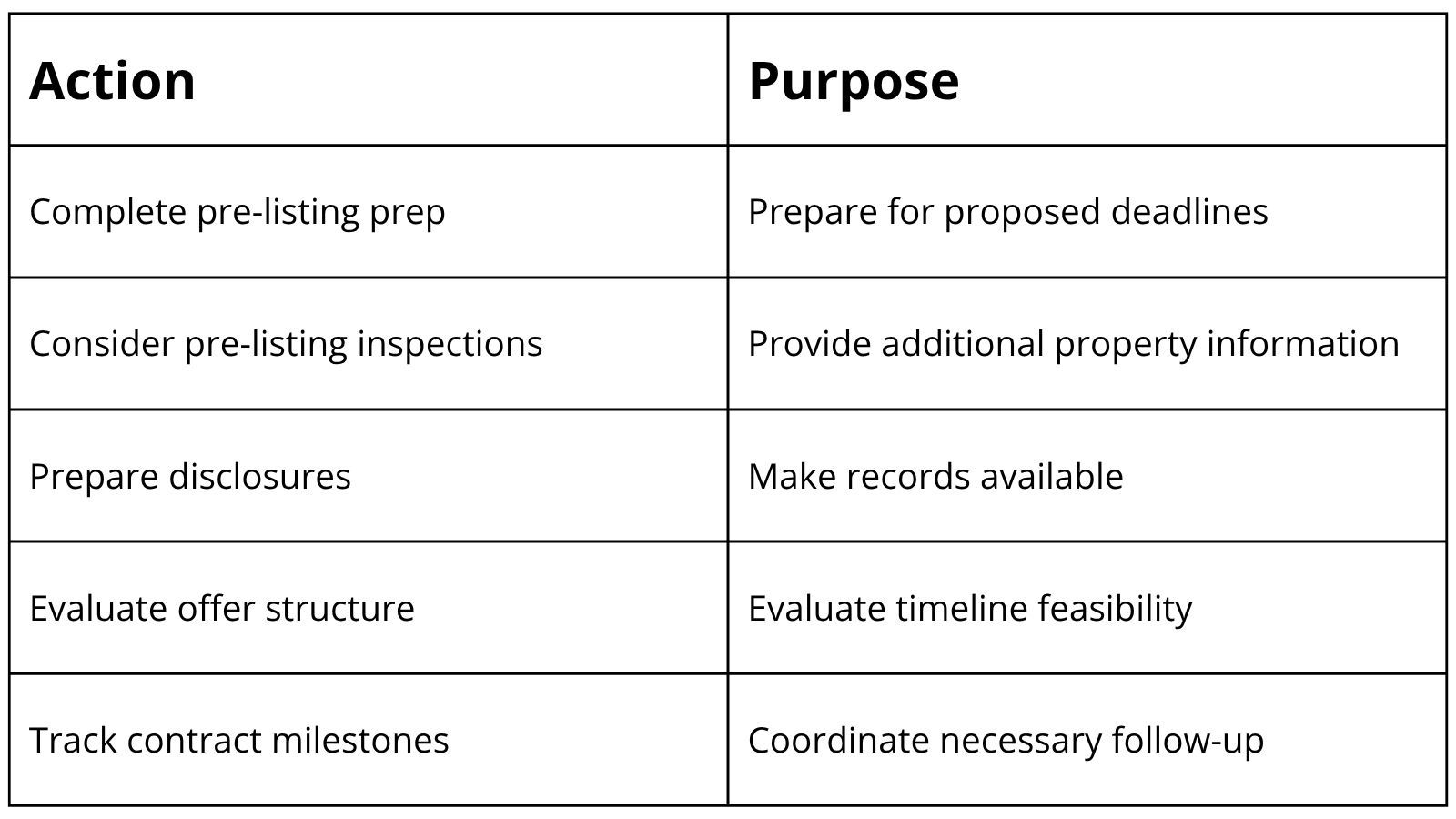
✅ What You Should Do Right Now
❓ FAQ
Q: Are shorter contingencies better for sellers?
A: Not automatically. Shorter contingency periods may appeal to some sellers, but they should be evaluated alongside financing, property condition, inspection requirements, closing arrangements, and the other terms of the offer.
Q: Can short contingencies increase risk?
A: They can create additional scheduling pressure when inspections, appraisals, financing reviews, or other requirements cannot be completed within the proposed timeframe. Sellers should review the entire agreement and discuss potential concerns with their real estate professional.
Q: Do contingency deadlines automatically remove a buyer's contractual protections?
A: Not necessarily. The handling of contingency deadlines, removals, and related procedures depends on the signed purchase agreement and applicable requirements. California sellers should review the relevant contract provisions with their real estate professional and seek qualified legal advice when necessary.
🔚 Conclusion
Shorter contingency periods can influence how a real estate transaction progresses, but they do not automatically provide greater certainty or lead to a faster closing. Sellers who prepare available property information, review applicable disclosures, and evaluate proposed offer terms can better understand the responsibilities associated with each transaction. Inspection access, appraisal scheduling, financing requirements, and contractual deadlines all deserve consideration before an offer is accepted. By reviewing the complete agreement and staying informed throughout escrow, sellers can make thoughtful decisions based on the property's circumstances and the terms of the transa
This blog is for general informational purposes only and does not constitute legal, tax, accounting, investment, or professional advice. Always consult with qualified professionals before making any decisions based on this content. School information including addresses, phone numbers, and emails was accurate as of the blog’s published date but may change without notice. Please verify directly with the school or institution. This content is provided “as is,” without warranties of any kind. If you are currently under an exclusive agreement with another real estate broker, this blog is not intended as a solicitation.
Contact Us