Utility Cost Transparency
Published January 29, 2026

Utility Cost Transparency
Utility costs are influencing buyer decisions more than before. Sellers who prepare and explain utility usage clearly are reducing objections, building trust, and protecting negotiations.
📝 Introduction
One of the growing seller considerations in 2026 is utility cost transparency. Buyers are paying closer attention to monthly expenses, especially electricity, gas, water, and trash. Rising energy costs and work-from-home lifestyles have made operating costs part of the buying decision. When sellers cannot explain usage patterns or provide context, buyers assume the worst. Sellers who prepare utility information in advance are controlling the narrative and avoiding unnecessary price pressure.
🔑 5 Pro Moves Sellers Must Make Around Utility Costs
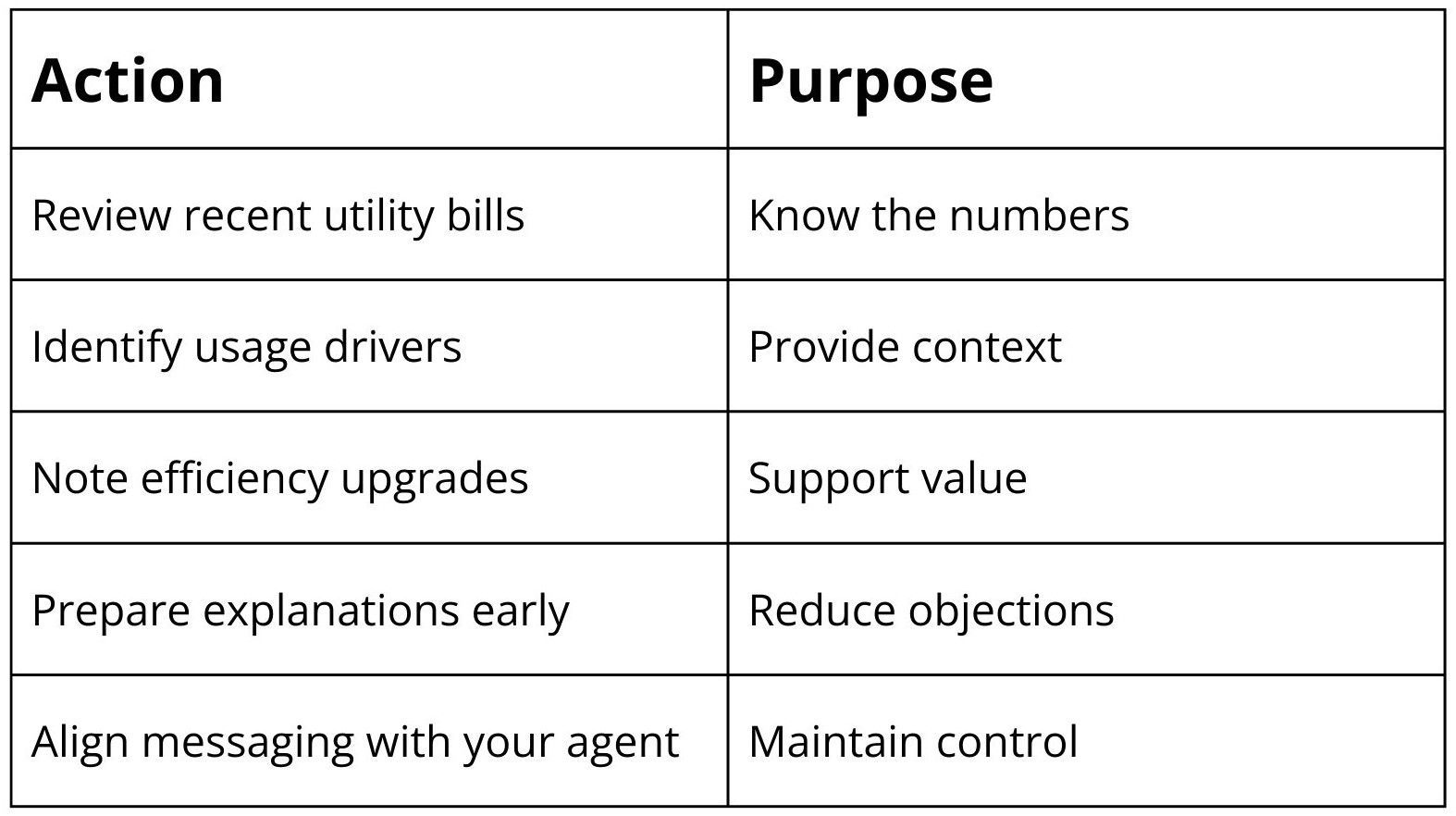
1. Review Recent Utility Bills Before Listing
Buyers will ask.
Now: Gather recent statements to understand average monthly costs.
2. Explain Usage Patterns Clearly
High bills without context raise concern.
Now: Be ready to explain factors like home size, occupancy, or solar offsets.
3. Highlight Efficiency Features
Buyers value predictable costs.
Now: Point out upgrades like insulation, efficient appliances, or solar support.
4. Avoid Letting Buyers Guess
Assumptions hurt negotiations.
Now: Provide clarity early instead of reacting during escrow.
5. Position Costs as Manageable and Understandable
Transparency builds confidence.
Now: Frame utilities as part of informed ownership, not a surprise expense.
✅ What You Should Do Right Now
❓ FAQ
Q: Do buyers really care about utility costs?
A: Yes. Monthly operating costs are now part of affordability decisions.
Q: Should sellers provide utility bills upfront?
A: Not always, but being prepared to explain costs helps prevent hesitation.
🔚 Conclusion
Utility costs are no longer an afterthought for buyers. In 2026, transparency around monthly expenses builds trust and protects negotiations. Sellers who prepare utility information and explain it clearly are avoiding unnecessary concern and strengthening their position. Preparation turns a potential objection into confidence.
This blog is for general informational purposes only and does not constitute legal, tax, accounting, investment, or professional advice. Always consult with qualified professionals before making any decisions based on this content. School information including addresses, phone numbers, and emails was accurate as of the blog’s published date but may change without notice. Please verify directly with the school or institution. This content is provided “as is,” without warranties of any kind. If you are currently under an exclusive agreement with another real estate broker, this blog is not intended as a solicitation.
Contact Us