
Solar Transfer Timing Matters
Updated November 17, 2026
Solar Transfer Timing Matters
Solar systems can involve different considerations during a home sale depending on whether the equipment is owned outright, financed, leased, or covered by a power purchase agreement. Some arrangements may require payoff information, transfer documentation, or approval from a solar provider or lender. Sellers who review these details before listing may have more time to understand their obligations and prepare for questions during the transaction.
📝 Introduction
A home with solar panels may have additional documentation and financial arrangements for sellers to review before listing. Systems that are fully owned and paid off can have different sale considerations from systems with outstanding loans, leases, power purchase agreements, or Property Assessed Clean Energy (PACE) financing. Depending on the agreement, selling the property may involve obtaining a payoff amount, requesting a contract transfer, or providing information about ongoing payment obligations. Certain financing arrangements may also require coordination with the title company, escrow officer, or buyer's lender. Reviewing available solar contracts and contacting the appropriate provider before listing can help sellers understand what steps may apply. The goal is to prepare accurate information and allow time for necessary procedures without assuming that every solar system requires a formal transfer.
🔑 5 Ways Sellers Can Prepare for Solar Transfer Questions
1. Confirm the Solar Ownership Structure Early
A fully paid-off solar system may be handled differently from one financed through a loan, lease, power purchase agreement, or PACE assessment.
Now: Determine whether your solar equipment is owned outright, financed, leased, covered by a power purchase agreement, or associated with PACE financing. Locate the relevant contract and account information.
2. Request Payoff or Transfer Documents Before Going Live
Some solar lenders and providers have procedures for obtaining payoff estimates, buyout information, or contract transfer documents. Requirements and processing times vary by agreement.
Now: Contact the applicable solar provider, lender, or PACE administrator to ask what documentation may be needed when selling the property and how long the process typically takes.
3. Disclose Solar Terms With Clarity
Solar agreements may contain information about remaining payments, contract duration, maintenance responsibilities, equipment ownership, and transfer conditions.
Now: Organize available contracts, financing information, payment obligations, warranties, and transfer provisions. Review applicable disclosure requirements with your real estate professional.
4. Coordinate Solar Details With Escrow and Title in Advance
Certain solar financing arrangements, including PACE assessments and some recorded security interests, may require additional review during the title or financing process. Not every solar system creates the same title considerations.
Now: Share relevant solar financing and ownership documents with your real estate professional. When appropriate, ask the title or escrow company whether any recorded matters require additional attention.
5. Do Not Wait Until Escrow to Address Solar Questions
Some solar agreements involve administrative procedures or approvals that may take time. Understanding those requirements early can help sellers prepare for the transaction.
Now: Ask the solar provider what steps apply to a property sale, identify documents that can be obtained before listing, and determine what information will need to be updated after an offer is accepted.
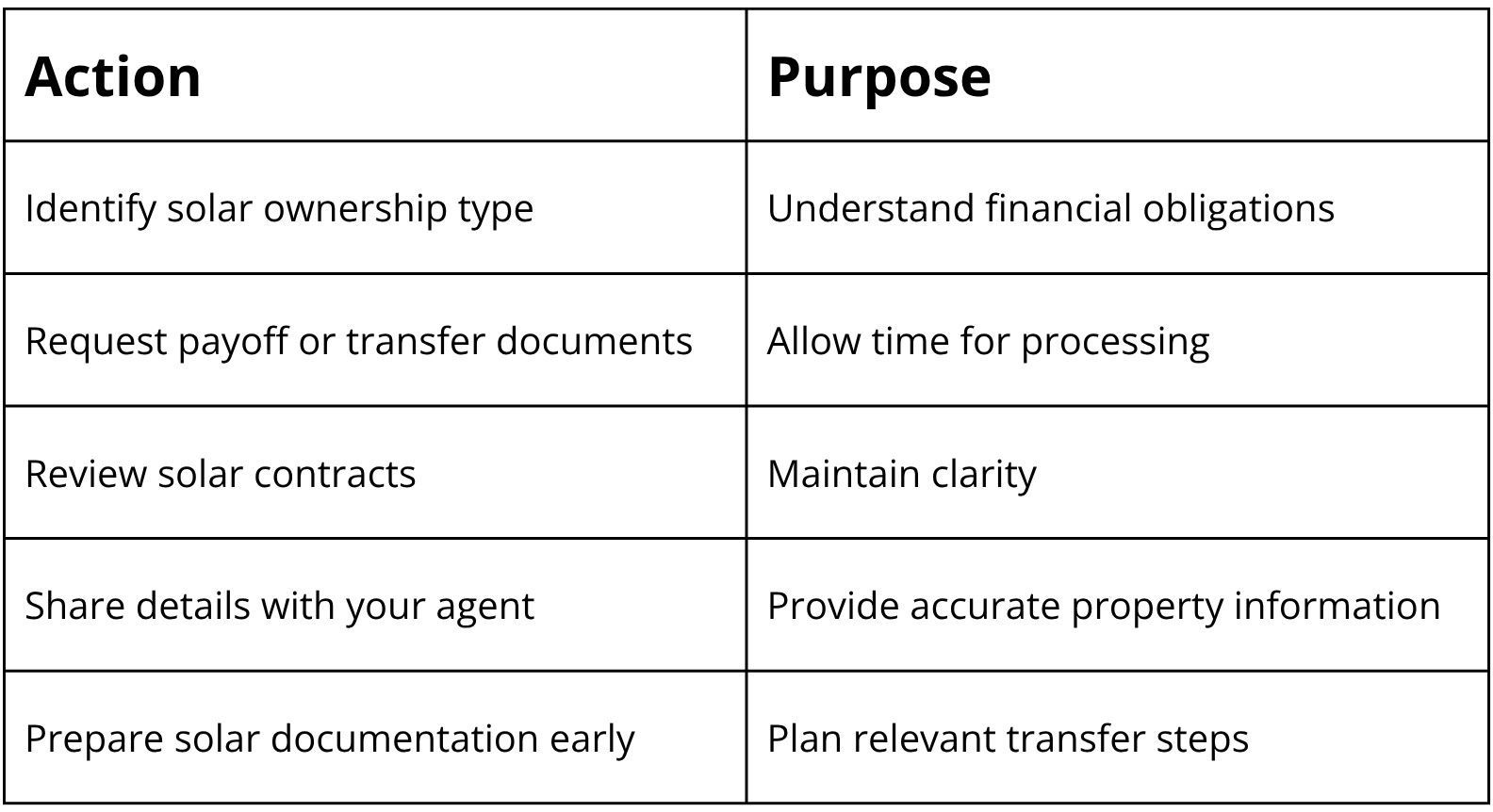
✅ What You Should Do Right Now
❓ FAQ
Q: Can solar systems delay a home sale?
A: They can, depending on the ownership and financing arrangement. Solar loans, leases, power purchase agreements, or PACE assessments may involve documentation, payoff requirements, or transfer procedures. Fully owned and paid-off systems generally involve fewer financing-related steps, although property-specific questions may still arise.
Q: Should sellers pay off solar before listing?
A: Not necessarily. The appropriate decision depends on the solar agreement, remaining balance, available payoff terms, and transaction circumstances. Sellers should review their options with the solar provider or lender and consult the appropriate real estate, financial, or legal professional when needed.
Q: Can a solar lease or power purchase agreement transfer to a new homeowner?
A: Some agreements permit transfers, but the requirements vary by provider and contract. A transfer may involve documentation, eligibility requirements, or approval from the solar company. Sellers should review the agreement and contact the provider to confirm the available options before making representations about transferability.
🔚 Conclusion
Solar systems can be an important property feature, but their ownership and financing arrangements deserve attention when preparing a home for sale. A fully paid-off system may involve different considerations from a solar loan, lease, power purchase agreement, or PACE assessment. Reviewing contracts, gathering available documentation, and contacting the appropriate provider before listing can help sellers understand possible payment, payoff, and transfer requirements. Although early preparation cannot eliminate every delay or negotiation, it may provide additional time to address questions and coordinate with the professionals involved in the transaction. Understanding the solar arrangement allows sellers to present accurate information and make informed decisions throughout the selling process.
This blog is for general informational purposes only and does not constitute legal, tax, accounting, investment, or professional advice. Always consult with qualified professionals before making any decisions based on this content. School information including addresses, phone numbers, and emails was accurate as of the blog’s published date but may change without notice. Please verify directly with the school or institution. This content is provided “as is,” without warranties of any kind. If you are currently under an exclusive agreement with another real estate broker, this blog is not intended as a solicitation.
Contact Us