Should You Finish Home Projects Before Selling?
Updated November 17, 2026

Should You Finish Home Projects Before Selling?
An unfinished repair or renovation can become an important consideration when preparing a home for sale. Reviewing what remains incomplete, evaluating the cost of additional work, and organizing available project records can help sellers prepare accurate information before listing.
📝 Introduction
A home can appear ready for the market while still having repairs or improvements that were never fully completed. These may range from unfinished painting and missing trim to partially completed remodeling projects or system upgrades. Depending on the work involved, buyers may have questions about the property's current condition, the remaining work, and any available contractor or permit documentation. Before deciding whether to complete a project or list the property in its existing condition, sellers can review the scope of the work, obtain estimates when appropriate, and consider how the unfinished items may affect the transaction.
🔑 5 Steps Sellers Can Take With Unfinished Projects
1. Identify Work That Remains Incomplete
Unfinished projects can involve cosmetic details, repairs, installations, or more extensive construction work.
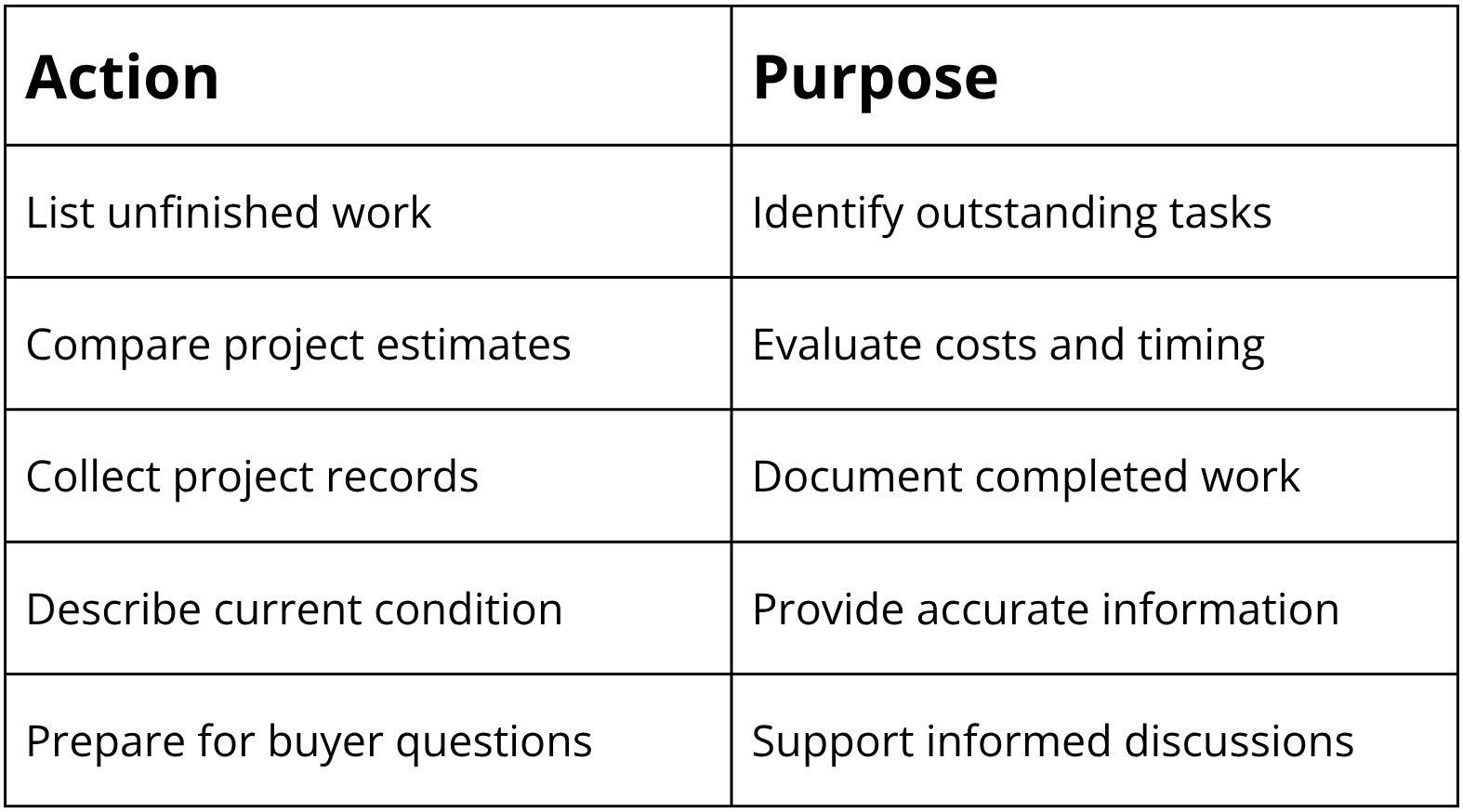
Now: Walk through the property and make a list of incomplete items, including unfinished painting, missing materials, partially installed fixtures, and projects that may require further professional evaluation.
2. Review the Cost of Completing Projects
Not every unfinished improvement has the same cost, scope, or priority when preparing a property for sale.
Now: Obtain estimates and projected completion timelines for significant items. Compare the potential expense with your listing schedule, property condition, and local market information before deciding how to proceed.
3. Organize Project Documentation
Contracts, invoices, plans, permits, and other available records can provide useful information about previously completed work and unfinished improvements.
Now: Gather available contractor records, receipts, plans, permits, inspection documents, and warranties. If questions remain about the status of a project, consult the appropriate qualified professional or local building department.
4. Represent the Property's Current Condition Accurately
A clean presentation can make a property easier to evaluate, but it does not resolve unfinished construction or maintenance concerns.
Now: Review listing photos, property descriptions, and available information with your real estate professional so they accurately reflect the home's condition. Discuss how unfinished work should be addressed in applicable disclosures and transaction documents.
5. Prepare for Questions About Remaining Work
Buyers may request information about what was completed, what remains unfinished, and whether supporting documentation is available.
Now: Be prepared to explain the known status of unfinished projects and identify which records are available. If additional information is needed, obtain it from an appropriate professional rather than making assumptions about the work.
✅ What You Should Do Right Now
❓ FAQ
Q: Do I need to finish every project before listing my home?
A: Not necessarily. Whether to complete a project depends on the work involved, its condition, estimated costs, available time, and circumstances of the sale. Sellers should also discuss applicable disclosure responsibilities and any unresolved safety, construction, or permit concerns with appropriate professionals.
Q: Can unfinished work affect buyer interest?
A: It can. Unfinished projects may lead to questions about repair costs, construction quality, permit status, or the remaining work. However, the effect varies depending on the project, the property's overall condition, pricing, and local market conditions.
Q: What documentation should sellers keep for unfinished renovations?
A: Available contracts, invoices, receipts, construction plans, permits, inspection records, warranties, and contractor correspondence can provide useful information. Sellers can organize these records by project and discuss any missing information with their real estate professional.
🔚 Conclusion
Preparing a home for sale does not necessarily mean completing every unfinished project. What matters is understanding which items remain incomplete, evaluating their condition and potential costs, and organizing the available information about previous work. Sellers can review estimates, consider their listing timeline, and determine which repairs or improvements are appropriate before bringing the property to market. Accurate property information and available documentation can also help address questions during the transaction. By reviewing these details in advance, sellers can make informed decisions about how to present their home without assuming that every project must be completed or that improvements will guarantee a particular selling result.
This blog is for general informational purposes only and does not constitute legal, tax, accounting, investment, or professional advice. Always consult with qualified professionals before making any decisions based on this content. School information including addresses, phone numbers, and emails was accurate as of the blog’s published date but may change without notice. Please verify directly with the school or institution. This content is provided “as is,” without warranties of any kind. If you are currently under an exclusive agreement with another real estate broker, this blog is not intended as a solicitation.
Contact Us