
Multi Offer Bidding Is Back. Here’s How to Handle It
Published October 31, 2025

Multi Offer Bidding Is Back. Here’s How to Handle It
In several U.S. markets, multiple-offer scenarios are rebounding. Sellers who get strong offers may face new decisions around escalation clauses, inspection waivers, and preferred closing timelines. Getting prepared now can give you the upper hand.
📝 Introduction
After a period of single offers and longer time on market, certain areas are seeing a return of bidding situations especially where inventory is limited and desirable properties are listed. For sellers, this means being ready to review and compare more complex offer packages rather than settling for the first bid. When you understand how to evaluate and structure for multi-offers, you can maximize your proceeds and reduce risk.
🔑 5 Pro Moves for Sellers Facing Multiple Offers
1. Set a Clear “Plan A” and “Plan B” Base Price
Knowing your bottom line gives you confidence and speed during offer review.
Now: Set your base acceptable price and your ideal target price, and communicate this to your agent upfront.
2. Instead of Only List Price Flexibility, Sort Offers by Index
The highest dollar doesn’t always equal the best net outcome.
Now: Rank offers by net proceeds after costs, closing certainty, timeline, and contingencies.
3. Consider Escalation Clauses Strategically
They automatically raise an offer when a competing bid appears.
Now: Decide if you’ll accept escalation clauses—and set a cap to protect your net.
4. Use Inspection/Contingency Waivers to Improve Offer Strength
Fewer contingencies make an offer more attractive and reduce fallback risk.
Now: Be open to an offer with fewer contingencies if it comes with strong deposit and good price.
5. Communicate Quickly & Confidently
In a multi-offer scenario, speed matters. Delays can derail a bid.
Now: Prepare listing-agent updates, have key documents ready (disclosure, HOA info, comps) and commit to evaluating offers within a set window.
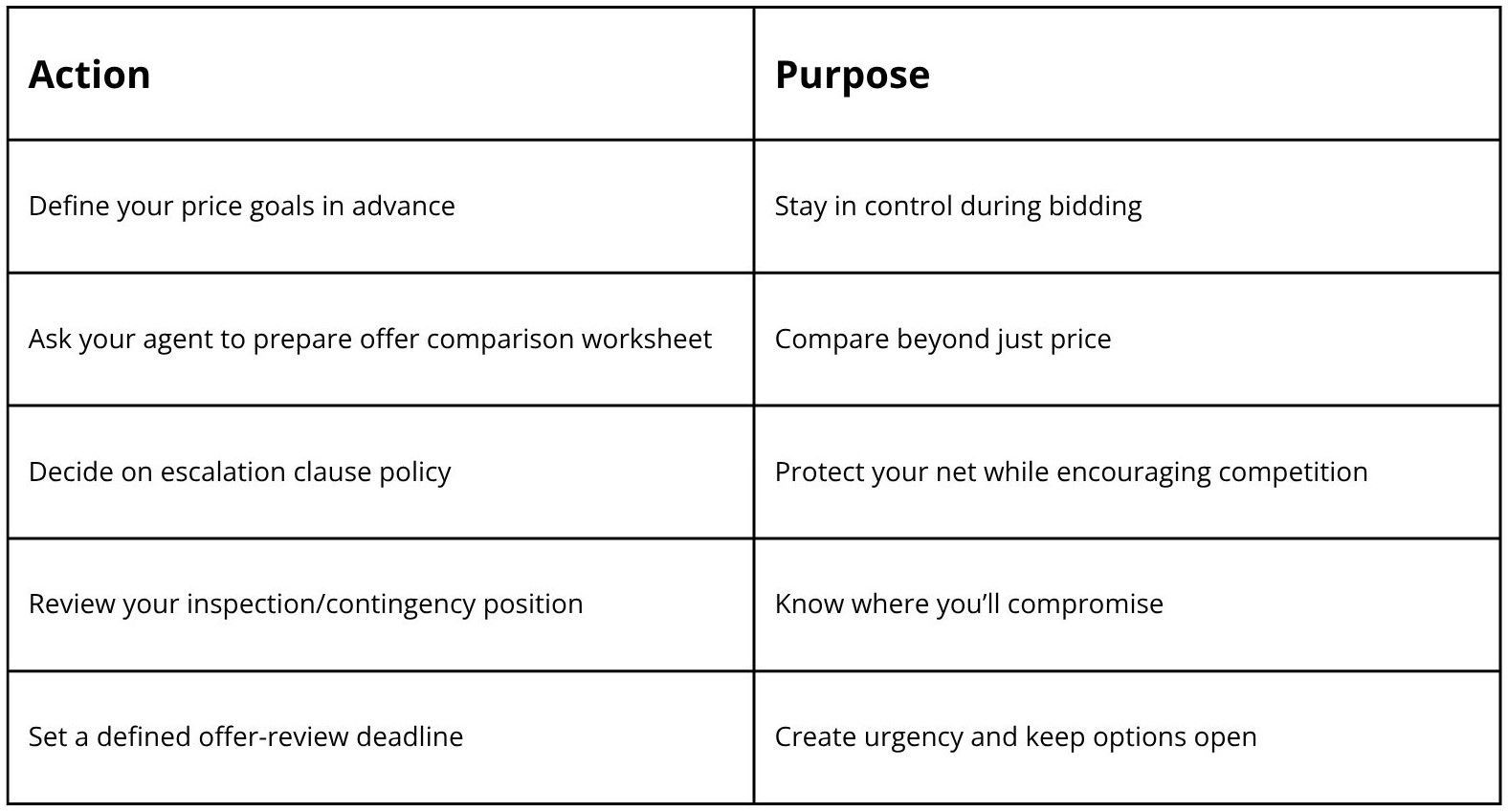
✅ What You Can Do Now
❓ FAQ
Q: Should I always go with the highest offer in a bidding situation?
A: Not always. The highest gross amount may come with weak terms or risk. Always factor in net proceeds, contingencies, and buyer strength.
Q: Does bidding war happen only in seller’s markets?
A: Mostly, yes. But local supply constraints or strong location demand can bring multi-offers even in balanced markets.
🔚 Conclusion
Multi offer bidding is back in some neighborhoods and when it happens, sellers can gain significantly. Being prepared with clear pricing plans, comparison tools, escalation clause strategies, quick response systems, and contingency stance gives you the advantage. When the offer flood comes, you’ll be ready.
This blog is for general informational purposes only and does not constitute legal, tax, accounting, investment, or professional advice. Always consult with qualified professionals before making any decisions based on this content. School information including addresses, phone numbers, and emails was accurate as of the blog’s published date but may change without notice. Please verify directly with the school or institution. This content is provided “as is,” without warranties of any kind. If you are currently under an exclusive agreement with another real estate broker, this blog is not intended as a solicitation.
Contact Us